
re:publica goes Hollywood
Europe’s largest digital festival now has an offshoot in Los Angeles. Co-founder Andreas Gebhard explains why Berlin’s re:publica is a good fit for California.
 Interview: Stefanie Hardick
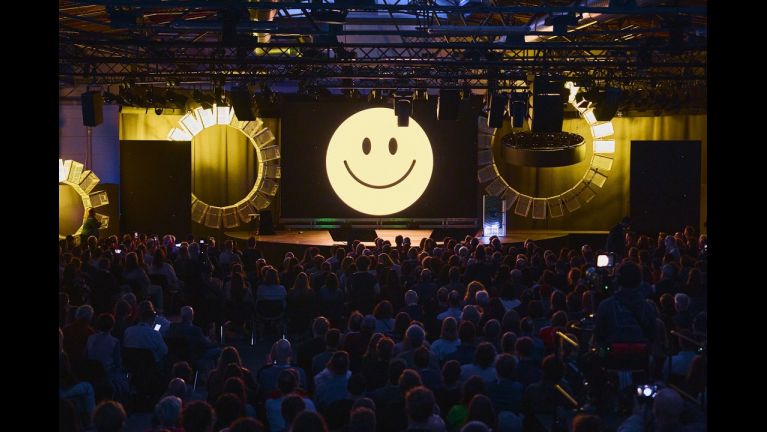
re:publica is a cross between a conference, a forum for debate and a festival. Founded in 2007 by Berlin’s then community of bloggers and internet activists, it has since become Europe’s largest festival devoted to digital society. From 8 to 10 November 2026, the conference will take place in Los Angeles for the first time, with support for its programme from organisations including the German Centre for Research and Innovation (DWIH) San Francisco (see below) and Deutsche Welle. re:publica co-founder Andreas Gebhard explains why.
Mr Gebhard, re:publica has been a cult event in Berlin for almost 20 years. It would be much easier to stay in your comfort zone. So why are you heading to the USA now?
Important debates are taking place in the USA at the moment, for example about the resources consumed by data centres and the use of artificial intelligence in the film industry. We need these American perspectives in Europe. That’s why we’re heading to California with something to offer: re:publica as a platform where we can inspire one another and gain an understanding of different perspectives.
Is there anything the USA can learn from Germany?
In Germany we’re looking very closely at how democracies can keep the situation under control. After all, AI companies are concentrated in the hands of a few people and are not subject to democratic oversight. One example of this different approach is the European Union’s AI Act, the world’s first law regulating AI. That’s a more difficult conversation to have in the US right now, but we’d like to encourage Americans to be more open to Europe.
Dieses YouTube-Video kann in einem neuen Tab abgespielt werden
YouTube öffnenThird party content
We use YouTube to embed content that may collect data about your activity. Please review the details and accept the service to see this content.
Open consent formWhy are you taking re:publica to Los Angeles rather than Silicon Valley?
re:publica aims to highlight the profound impact of digital change on society as a whole, bringing together media, culture, politics, science and technology. And Los Angeles has a vibrant cultural and media scene alongside its high-tech sector.
Hollywood also has powerful historical significance for us: many Germans fled there during the Nazi era and helped build up the media and technology industries. That’s why we’re opening re:publica at the Thomas Mann House and closing it at Villa Aurora. These are the places where German writers Thomas Mann and Lion Feuchtwanger lived in exile.

In 2027, Berlin and Los Angeles will celebrate the 60th anniversary of their twinning agreement. Will re:publica LA be back for another edition then?
We want re:publica LA to become an annual showcase for Germany and Europe. This year we’re getting things started with a self-funded pilot event, and we want to build the community organically. re:publica in Berlin has always had something Californian about it. People don’t just come to learn: they recharge their batteries by meeting people on an equal footing who are doing exciting things in the digital world. re:publica is a place of possibility and hope. And we need much more of that today.
One of the co-organisers of re:publica Los Angeles is the German Centre for Research and Innovation San Francisco. It is part of a global DWIH network with other locations in New York, New Delhi, São Paulo and Tokyo. Coordinated by the German Academic Exchange Service (DAAD), the network raises the profile of German research and promotes collaboration with local partners.


