
Taking a stance for democracy in the spirit of Thomas Mann
55 Voices for Democracy: the multi-media series produced by the Thomas Mann House Los Angeles relies on prominent voices to promote a democratic culture of debate.
 Johannes Göbel
 A warning voice in a dark time: around 80 years ago, the BBC broadcast the last of Thomas Mann’s 55 speeches titled “German listeners!”. In these speeches delivered between 1940 and 1945, the Nobel Prize winner had vehemently opposed the Nazi regime, making him the most prominent German defender of democracy during his time in exile. The famous author of “Buddenbrooks” and “The Magic Mountain” and his wife Katia lived in Pacific Palisades, Los Angeles, for ten years. The fight for democracy continues at the Thomas Mann House that is now a place of encounter.
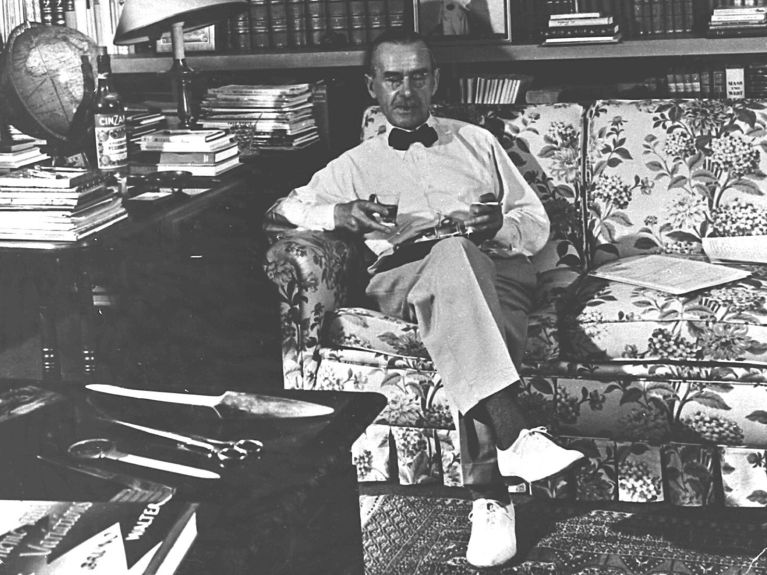
The “Atlantic” author George Packer (“Last Best Hope: America in Crisis and Renewal”) and the US philosopher and Director of the Einstein Forum in Potsdam, Susan Neiman, are next in line in a comprehensive series of videos that is being created at the Thomas Mann House. The series presents an extraordinary range of voices from academia, culture and the media, who speak about the current status of democracy. Previous participants include the journalist Melissa Chan, the writer Colm Tóibin and the political scientist Francis Fukuyama. The 55 episodes of the audio podcast format of “55 Voices for Democracy” have already been completed, with the number of episodes reflecting the number of Mann’s speeches.

Dieses YouTube-Video kann in einem neuen Tab abgespielt werden
YouTube öffnenThird party content
We use YouTube to embed content that may collect data about your activity. Please review the details and accept the service to see this content.
Open consent formNew perspectives of democracy
“The contributors are inspired, among other things, by the questions, what Thomas Mann would have to say about the current developments, and what we can do to strengthen our democracies today,” says Benno Herz, Program Director at the Thomas Mann House. “Mann himself only got passionate about democracy later in life. Franklin D. Roosevelt’s Presidency in the US and his fight against Nazi Germany had a strong impact on Mann’s attitude.” Mr. Herz continues by saying that the Thomas Mann House now seeks to inspire improvements of democracy with its series “55 Voices for Democracy”. “We believe that it is part of our mission to establish a place for debate where the crisis of democracy can be discussed in a constructive manner.”
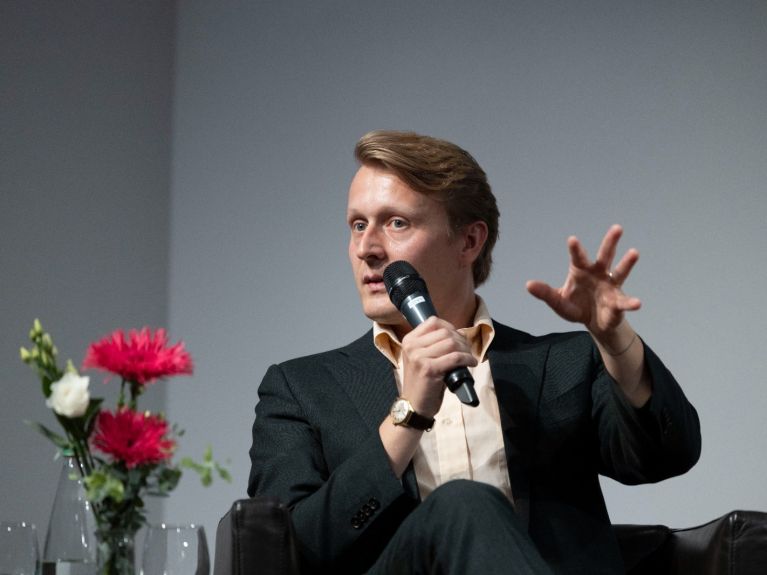
Figures from various areas of society speak about new perspectives of a liberal democracy in the podcast format. The Harvard Professor Daniel Ziblatt, for example, talks about populist movements gaining strength in the US and in Germany. Among other things, the co-author of the best-selling book “How Democracies Die” calls for the protection of voting rights and restriction of influence exerted by radical minorities.
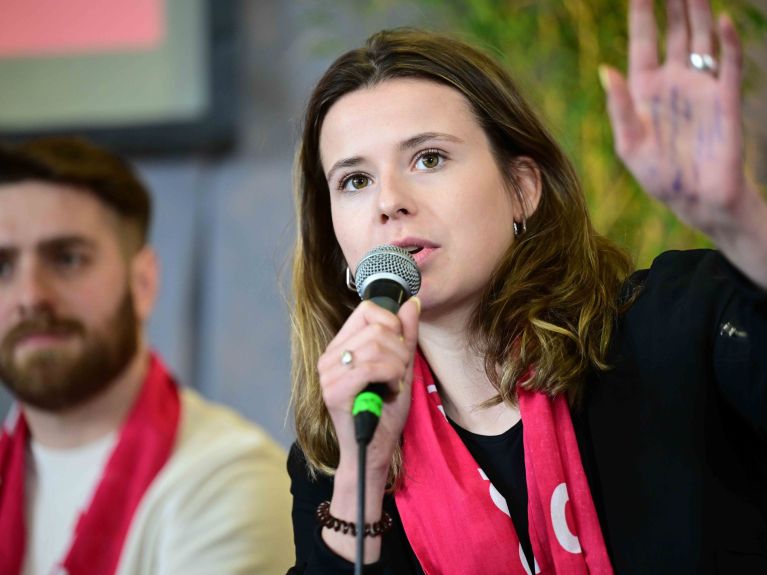
Democracy impacts many different areas of life. The German activist Luisa Neubauer speaks about the civilian power of the climate-action movement, the American poet Clint Smith talks about difficulties related to commemorative culture in Germany and the US in view of slavery and the Nazi regime as ruptures of civilization. The German best-selling author Daniel Kehlmann explains how literature can promote empathy as a remedy against populism.
We want to know: what unites us? What makes a democracy strong?
Benno Herz stresses: “We want to sound out our values and to refocus on the German-American friendship. We want to know: what unites us? What makes a democracy strong?” This question is also explored by the Thomas Mann House Fellows, many of whom are also involved in the podcast and video series. The Thomas Mann Fellowships enable intellectuals and researchers who live or used to live in Germany to nurture exchange between Germany and the USA during their time in California. They pursue their respective projects at the historic site where Thomas Mann used to live while in exile. Issues addressed by the Fellows include deadlocked positions on climate change, the role of the economy in a democracy, and the dangers associated with conspiracy theories.
From gender equality through to the fight against right-wing extremism
The participants of the “Voices for Democracy” video format address their audience directly, which is in part intended as a ways to encourage viewers to join in and think about the future of democracy. Regardless of whether they are talking about gender equality, the fight against right-wing extremism, or the ways in which the perspectives of refugees can be enriching for a society, they all help to bring Thomas Mann’s cause to the present day. And the same will be true of the new video episodes that will be created over the next few months.


