“I attempt to reveal the intangible”
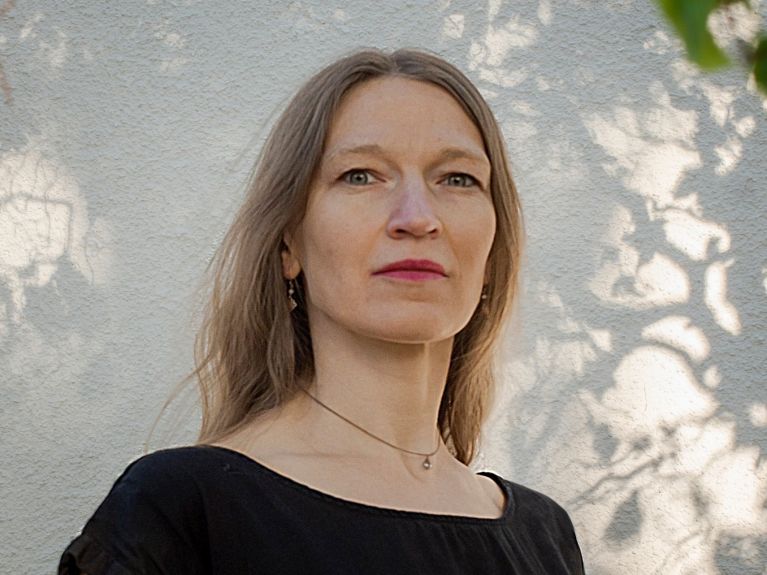
The photographer and teacher Irina Unruh talks about her childhood in Kyrgyzstan, her sudden move to Germany and her search for home in her images.
 Interview: Wolf Zinn
 Ms Unruh, you were born in a village in Kyrgyzstan and moved to Germany in 1988 at the age of nine. Do you remember the moment you realised that you were to be allowed to leave Kyrgyzstan?
Yes, I remember it very well. It was the evening before we left, and suddenly my parents said to me: “We’re travelling to Germany tonight - for ever.” I could hardly believe it. My family had spent years applying for permission to leave, but all their many applications had been rejected. And suddenly we just had to drop everything and leave. It was only after landing in Germany that we knew for certain it had really worked.
What was it like for you to arrive in Germany?
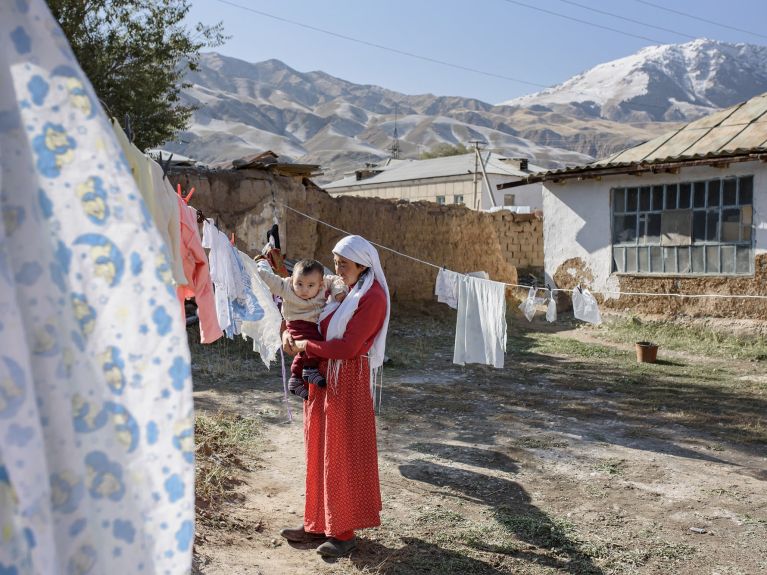
It was an abrupt change from our rural lives in what today is Kyrgyzstan. I grew up surrounded by snow-capped mountains and lots of animals, and had also experienced a completely different system of schooling. I felt “speechless” in the most literal sense of the word. I also missed my cousins and friends. It took time for me to get used to our new life in Germany, to feel at ease speaking German and to make new friends.
You are from a Russian German family with Mennonite roots. Can you briefly explain this?
The Mennonites belong to an independent Protestant church established by Anabaptist movements during the Reformation period in Switzerland and the Netherlands. Most of my ancestors came from West Prussia, near Gdansk. In the 18th century, there were severe restrictions of many civil rights, also for Mennonites, prompting them to emigrate to Tsarist Russia. There they were able for generations to preserve their own language, a dialect of Low German. Later, in the Soviet Union, religion was undesirable, which is why my relatives would repeatedly apply to leave or would simply flee if they could. As a result, my family these days is scattered across many countries, though most of my relatives live in Germany. I describe myself neither as a Russian German nor as a Mennonite, but rather as a descendant of this ethnic religious minority.
When did photography enter your life?
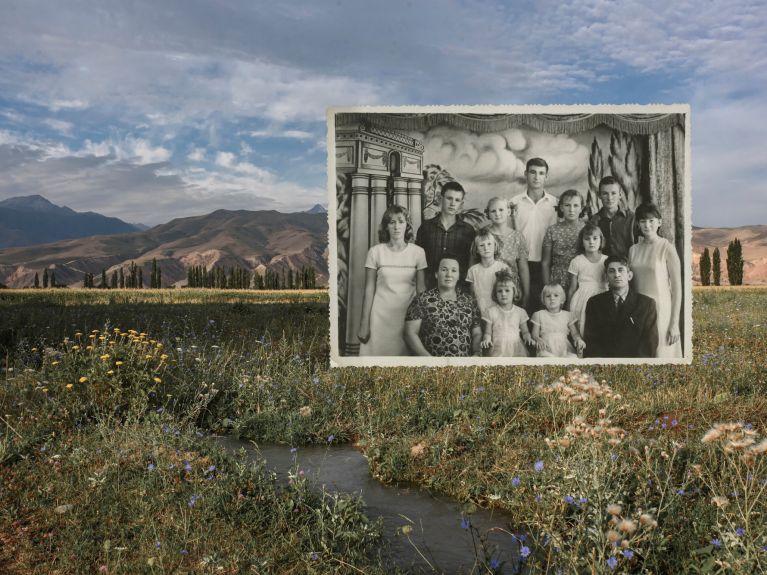
Back in Kyrgyzstan. My father and one of my aunts photographed a lot and documented our family life. I always felt there was something magical and fascinating about photography. Later, while studying to become a teacher in Bielefeld, I began taking photography seriously - though more as a hobby at first. That said, I always had my camera with me, including when I lived and worked for a year in Costa Rica and for five years in Rome. That’s also where I had my first exhibition. I now live with my husband and two children in the Münsterland region, where I work as a photographer and teacher – photography is and will always remain an important part of my life.
You’ve travelled all over the world - and decided at some point to return to Kyrgyzstan. Why?
After 20 years I suddenly realised that I was familiar with so many countries, but didn’t really know the country of my birth at all well. I couldn’t get the thought out of my mind. So I went back. And I immediately felt that feeling again: the colours, the light, the smells, the mentality of the people - it was as if something inside me breathed a sigh of relief. Although most of my relatives no longer live there, I immediately felt deeply connected to the land and to the landscape; ever since, I keep going back.
Your photobook “Where The Poplars Grow”, which among other things was awarded the German Photobook Prize in Silver, tells the story of this return. What is the title’s significance for you?
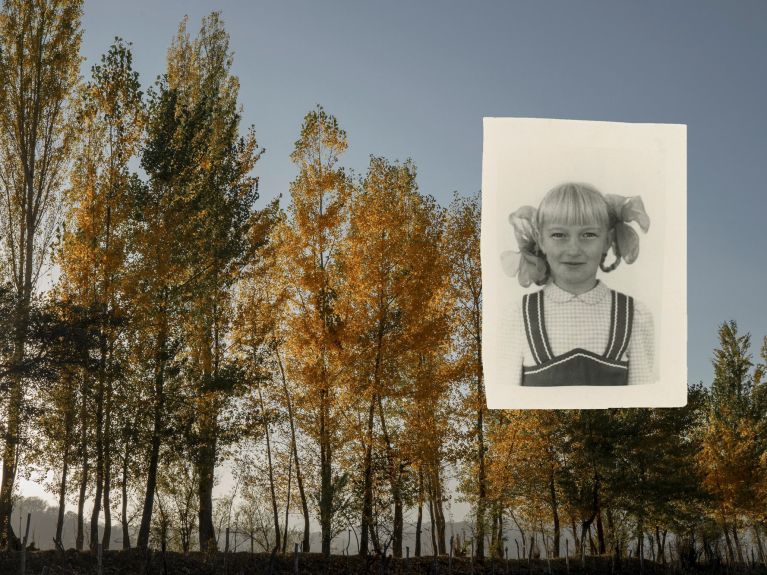
When I travelled to Kyrgyzstan again for the first time after 20 years and also visited the village of my childhood, what struck me especially, besides the breathtaking mountain scenery, were the countless poplar trees that grow widely throughout Eurasia. For me personally, they are a symbol of my childhood. They line the streets in the villages of Kyrgyzstan, they rustle in the wind, and they feel to me like the guardians of a time that will never end. My photobook is about my family’s history, the lives of the German minority in two small villages there, and about departures and new beginnings. Rather than looking in from the outside, it is an attempt to understand how, over the generations, searching for freedom of religion, fleeing and emigration resulted in a small minority settling in what is now Kyrgyzstan. My family’s history exemplifies countless similar family histories, which I attempt to narrate against the background of the global political situation at the time.
Your photographs are shown in exhibitions and have appeared in magazines such as Geo, Stern and National Geographic. What motivates you?
Photography is more than just a job to me. Through my images, I attempt to reveal the intangible - memories, identity, loss, but also beauty. For me it’s about shining a spotlight on what remains.
And what are you working on at the moment?
I’m planning a new photobook, this time featuring photographs from Germany. It will address a new chapter, though essentially it will also be about life paths - about what shapes us and holds us together.
