
GSG 9: precision under extreme pressure
GSG 9 has been operating for more than five decades as a special operations unit of the Federal Police in the fight against terrorism, violent crime and new hybrid threats.
 Wolf Zinn
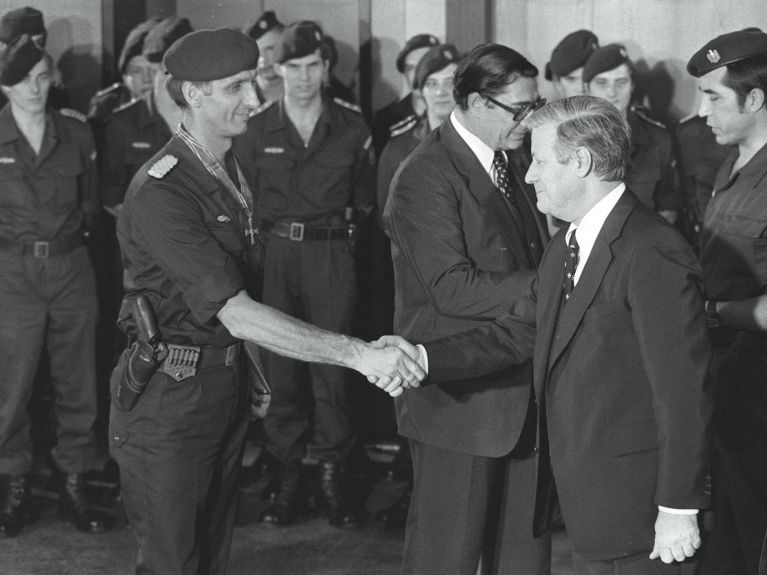
 It is the night of 18 October 1977. The Lufthansa jet Landshut sits on the runway at Mogadishu airport, hijacked by Palestinian terrorists. The hijackers’ goal is to force the release of imprisoned members of the German terrorist group Red Army Faction (RAF). Inside, 86 hostages are waiting; outside, around 30 armed men dressed in black move silently towards the aircraft. They are members of the German special operations unit GSG 9. At 2.05 a.m., they storm the plane. Within minutes, all hostages are freed and three hijackers are dead. The operation is still regarded as a textbook example of precision under extreme pressure – and made the elite unit world-famous.
Foundation and mission
Border Protection Group 9 – or GSG 9 (Grenzschutzgruppe 9) for short – was founded in September 1972 as a consequence of the failed police operation at the Olympic Games in Munich, where eleven Israeli athletes were murdered by Palestinian terrorists. Germany needed a special unit able to respond quickly and effectively to such situations. A small, highly trained force for counterterrorism, hostage rescue and high-risk operations at home and abroad was formed in Sankt Augustin near Bonn. GSG 9 is part of the Federal Police and divided into specialised groups, including maritime operations, explosives deployment, surveillance and covert entry.

Over more than five decades, GSG 9 has been deployed around 2,000 times – mostly without the public ever knowing. It has taken part in operations against Islamist terror cells, protected diplomatic missions abroad, supported anti-piracy missions off Somalia and helped in the capture of internationally sought high-risk offenders. It stands ready whenever an immediate threat arises – for example at airports or when critical infrastructure is attacked.
New threats, new responses
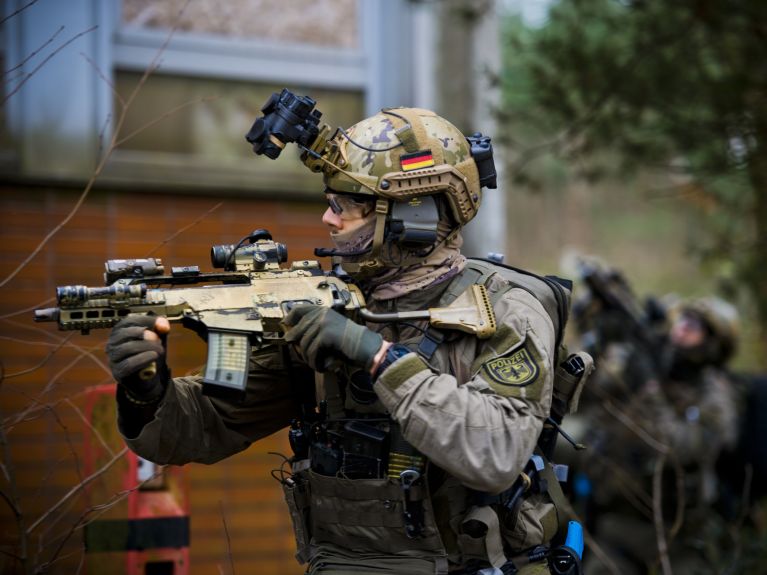
The security situation has become more dangerous and more complex: networked terrorist groups, sabotage, espionage, clan crime, cyber-attacks, hybrid threats. GSG 9 commander Robert Hemmerling recently told RBB: “When it comes to countering new threats, we need to think in a much more interconnected way. The line between internal and external security has become increasingly blurred.” For this reason, GSG 9 works closely not only with other German units but also with international partners, especially the United States. In order to strengthen its operational capability, the unit is expanding its presence: a new training and competence centre is being built in Berlin, and an additional base for maritime operations is planned on the North Sea coast.


