Minus 23 degrees, no electricity - and the fear of being forgotten
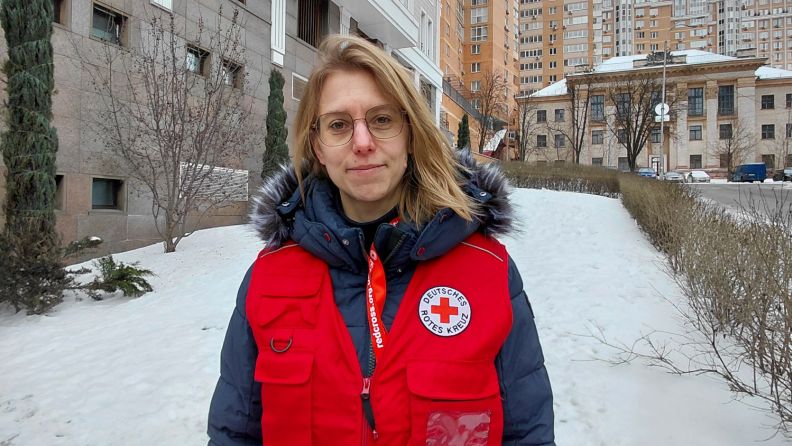
In the harshest winter of war to date, hundreds of thousands of Ukrainians are living without heating, water and electricity. Lisa Taschler from the DRK explains where German aid is having an impact.
 Stefanie Hardick
 Ms Taschler, is there any good news at all from Kyiv this winter?
Yes. Thanks to numerous donations, the DRK is able to widen the provision of its aid in Ukraine. We are initially transporting 18 emergency generators to Kyiv. I have just had a meeting with our partner organisation, the Ukrainian Red Cross. Given the weather, we have to act quickly because we can’t afford any accidents on the icy roads between Germany and Ukraine.
What exactly are the generators needed for?
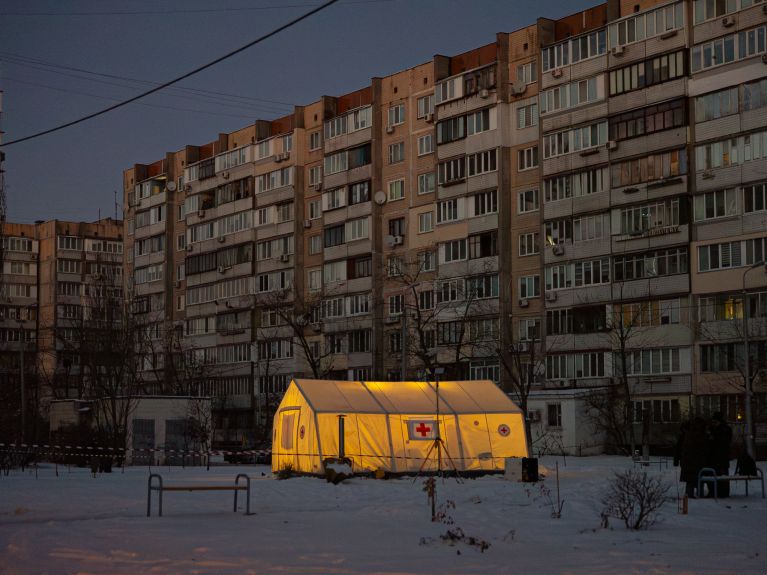
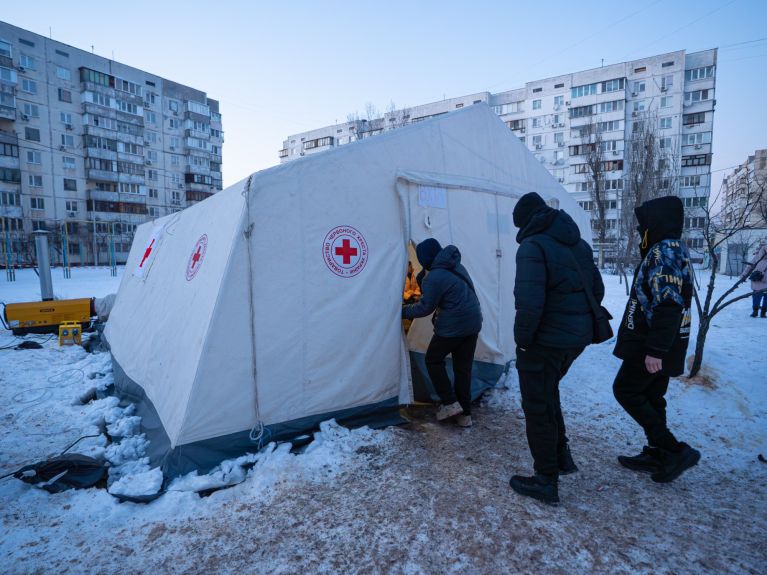
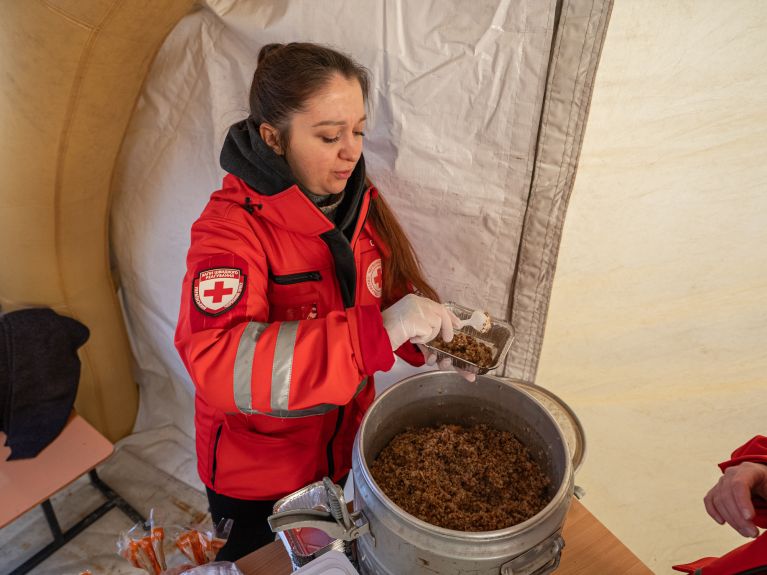
We use the generators to set up additional heating points. Much of the country’s energy infrastructure has been destroyed or damaged in the attacks of recent months. At the same time, Ukraine is currently experiencing its coldest winter for ten years, with temperatures plunging to minus 23 degrees. The temperature inside many apartments has dropped to 3 to 5 degrees, pipes are bursting and heating systems are down. To ease the worst of the hardship, the Ukrainian Red Cross has teamed up with the State Emergency Service to set up more than 100 heating points. They are proving vital to survival for many thousands of people this winter. They have the chance to warm up there, have a hot drink, recharge their phones or pick up water for neighbours who are unable to come themselves.
You mean, some people can’t even get to the heating points?
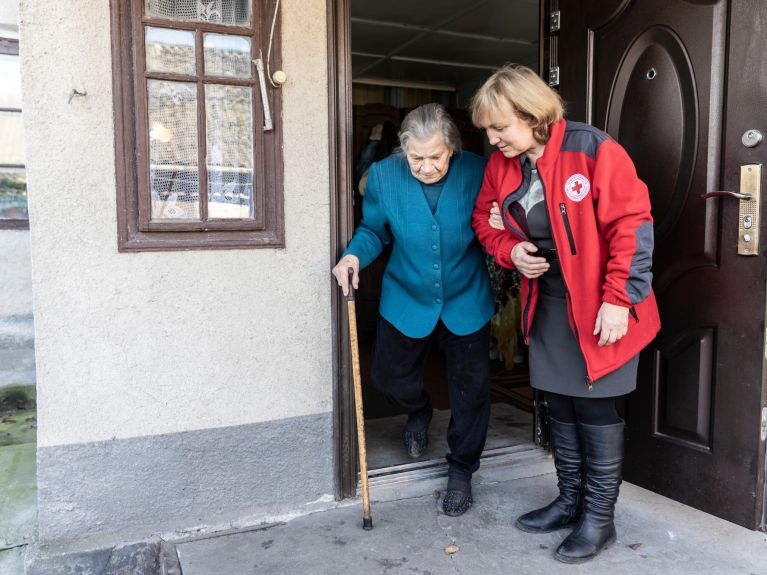
Many Kyiv residents live in 20- to 30-storey tower blocks. With the power down and lifts no longer working, older people in particular are now stuck in their flats. It’s an enormous problem for the mobility-impaired and families with small children, too. And even if they are able to leave their homes, the icy roads are treacherous and often it’s pitch dark once evening falls. Many people in Kyiv run errands for friends and acquaintances who are less mobile so as to protect them from having to go out and possibly injure themselves.
What is the German Red Cross doing to help in this complicated situation?
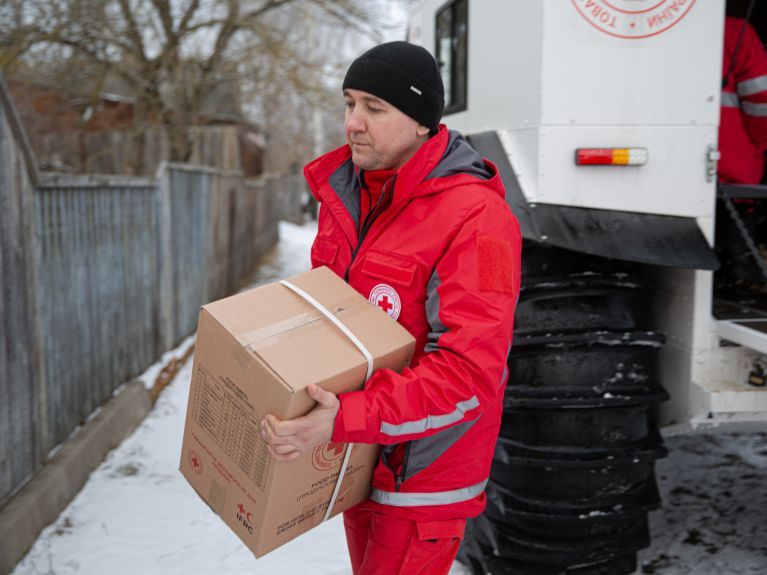
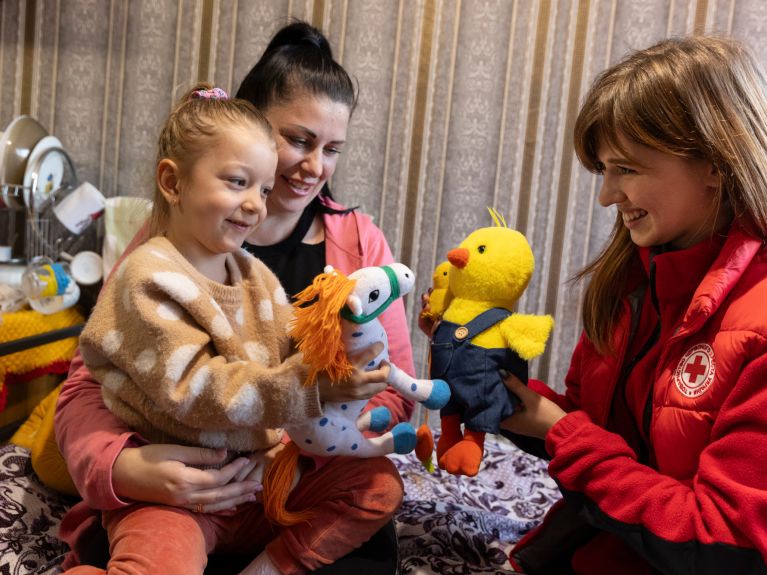
The German Red Cross is focusing above all on providing healthcare. Thanks to the donations, we have been able to expand our mobile care services for people who are unable to leave their homes. Our teams bring blankets and food and provide social support. After all, it’s not just physical hardship, but in many cases also prolonged isolation that is the problem. That’s why we’ve extended our psychosocial services for older people, families and children in community centres. We bring mobile healthcare to people in remote villages, working closely together with our Ukrainian partners.
You mentioned the situation faced by families with small children. How are they getting through this winter?
If the temperature inside a flat falls to five degrees, this can quickly become perilous for small children. Some parents then move their children out of their own rooms and into the hall of the flat. Being further from the outer walls, it’s often not only warmer there but also safer, for example if they can’t get to the air-raid shelter in time. During the day, many parents take their children with them to work. Most schools are closed, and because many firms have their own generators, the workplace is often where it is warmest. This also means that parents don’t have the unbearable agony of being separated from their children during air strikes.
How are Ukrainians coping with this double burden of war and winter?
Many are exhausted and worn down. Armed conflict has shaped life in Ukraine for years, and since 2022, the strain has intensified dramatically. When I first visited the country, no one expected this conflict to last so long. Everyone hopes for peace. But even if the fighting ended tomorrow, its consequences would continue to shape society for many years to come. Children in particular carry the experiences they have had with them. They are growing up in a state of emergency, which for many has long since become everyday life. At the same time, I am impressed by the solidarity. Despite all the hardship, people support each other, look after their neighbours and the children of parents who are away.
Do you get the sense in your work that global attention on Ukraine is dwindling?
Especially in this harsh winter, we continue to experience a great deal of solidarity and receive numerous donations. This is important and provides concrete help. The German government and the European Union are also maintaining their support. At the same time, with each passing month, there is growing concern that international attention will wane. The humanitarian situation remains dire, and the longer the armed conflict continues, the greater the risk that it will become normal for many people.
Lisa Taschler (born in 1987) has been involved in humanitarian aid around the world for 15 years. Since 2023, the Austrian has been working as a delegate for the German Red Cross, with regular assignments in Ukraine. She previously worked for the Austrian Red Cross in Ukraine.