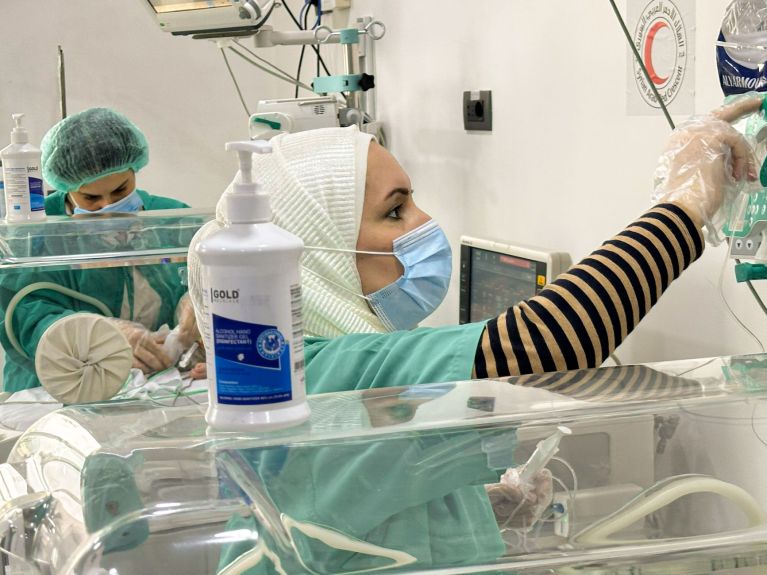
A children’s hospital between destruction and new beginnings
War, poverty and destroyed infrastructure: for many families in Syria, medical care is out of reach. The German Red Cross provides humanitarian assistance.
 Kim Berg
 Babies’ cries echo through the corridors, and outside the examination rooms parents wait with their children for an appointment. The children’s hospital of the Syrian Arab Red Crescent (SARC) in Aleppo, founded in 1976, was the first hospital in Syria dedicated exclusively to young patients. “The doctors saw the city’s growing need for a facility that could treat children medically in the way they require, with specially trained staff and a dedicated nursing concept,” says hospital director Ahmad Alshiek. Many of the nurses working there today have over 30 years of professional experience. For this reason, other hospitals refer their particularly severe cases specifically to this facility.
Spread across seven floors, the hospital has several wards, diagnostic units, incubator areas, operating theatres and an intensive care unit. Tens of thousands of children are treated there each year. Many of them are not from Aleppo itself, but from the surrounding villages. In 2025 almost 31,000 patients received inpatient treatment, more than 2,100 operations were performed and over 1,600 babies were cared for in an incubator (figures as of November 2025).
Health infrastructure in Syria severely damaged
But day-to-life in the hospital is dominated by crises. The years of fighting in and around Aleppo have severely damaged the health infrastructure, too. Only 57 per cent of hospitals and 23 per cent of primary health centres are functioning. For many Syrians, medical care now exists only on paper: treatment in private clinics is unaffordable and state facilities are overstretched. “There are many villages that have no access to a permanent health centre,” says Rama Kassar, SARC’s health coordinator.
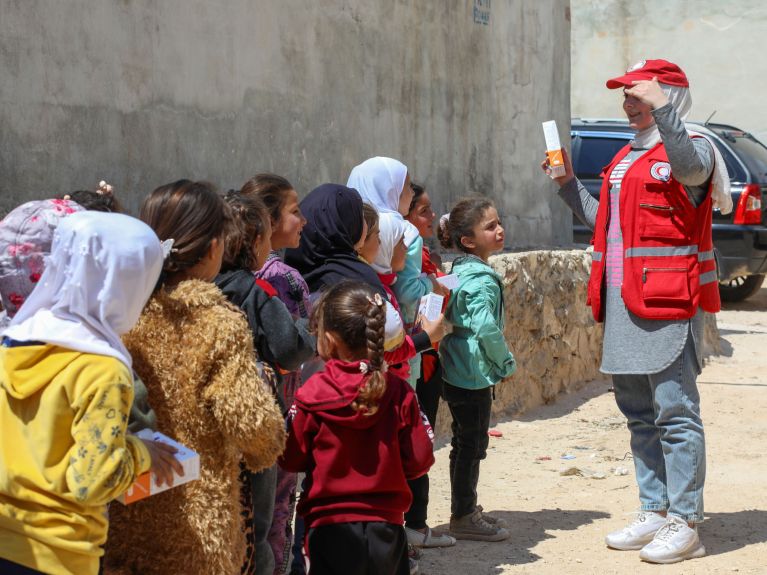
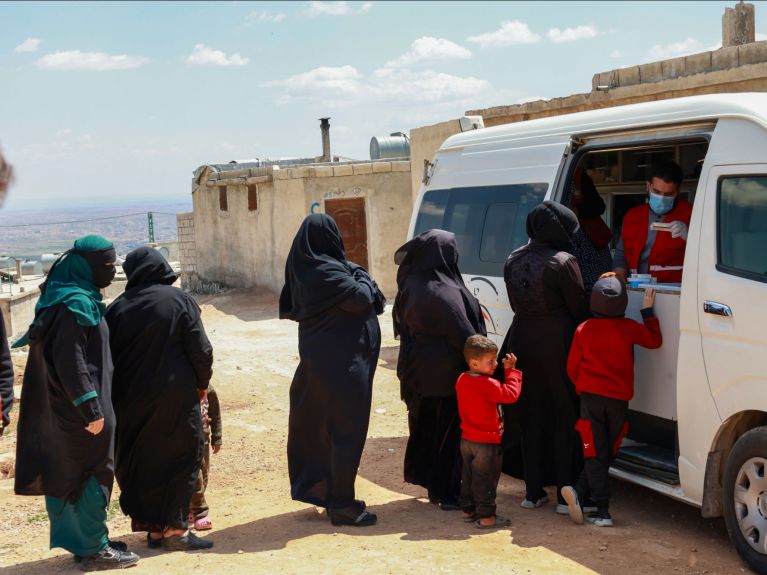
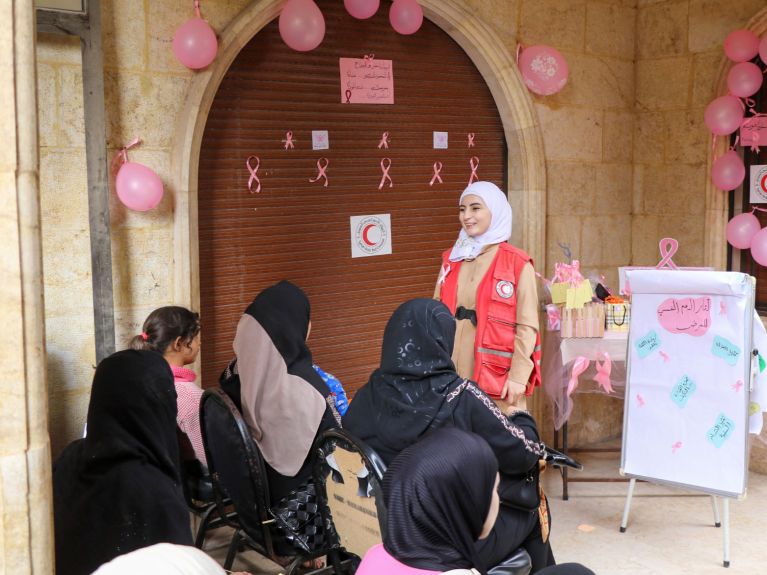
Founded in 1942, SARC belongs to the International Red Cross and Red Crescent Movement. As Syria’s largest humanitarian organisation, SARC operates hospitals, runs mobile medical teams, and provides physiotherapy and nutrition services. It covers around 60 per cent of humanitarian assistance in Syria. 285 staff and 2,000 volunteers work for the Red Crescent in the Aleppo region alone. Although SARC offers free healthcare, many families can’t even afford the journey to hospital. “Sometimes pregnant women don’t come to the hospital to give birth because they have no money for transport,” says Kassar. SARC aims to close this gap with its Cash for Health programme. “We offer to cover patients’ transport costs to the hospital,” Kassar says.
War damage to health facilities
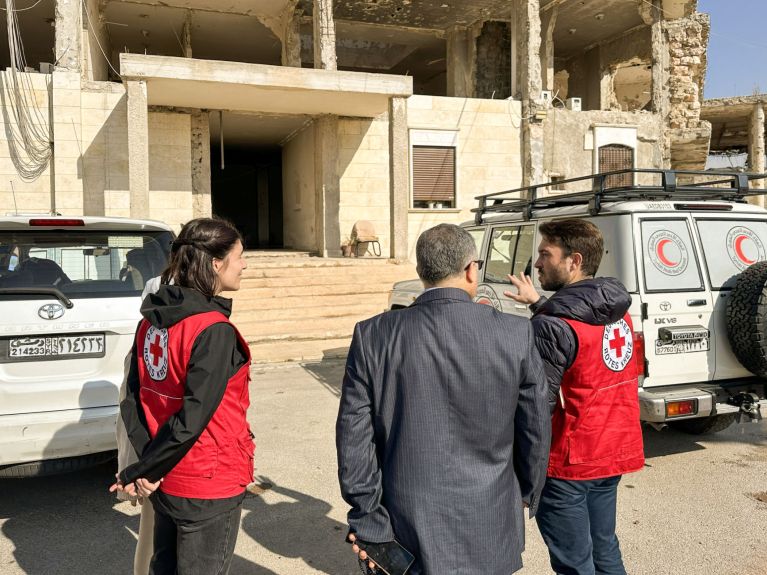
But the SARC branch in Aleppo – which includes the children’s hospital – is itself affected by war damage. The former main building in the Al-Shahba district was largely destroyed. A training centre for nursing staff also lies in ruins. It’s a sight that weighs heavily on Hail Assi, head of the SARC Aleppo branch. “We won’t be able to return here before 2026 at the earliest,” Assi says. Hardly anything remains of the neighbouring buildings. “We had big plans here,” he says. “Hopefully we can rebuild everything.”
Supporting healthcare provision with help from the DRK
SARC receives support in addressing the most urgent humanitarian health needs from the German Red Cross (DRK). The DRK has been working with its national sister society since 2012. Direct cooperation with the SARC branch in Aleppo was added in 2022. Since then, the DRK has financed a fixed share of the monthly treatments in the children’s hospital and has provided technical expertise. “In the intensive care unit, the DRK covers about 95 per cent of treatments, 76 per cent of operations and 51 per cent of incubator care,” says hospital director Alshiek.
“We’re not just a donor. We’re a partner to SARC and work closely with them,” says Giulia Spini, DRK programme coordinator for Syria. “We continue to invest in capacity building, staff costs and training, offering courses on neonatal resuscitation, for instance.” The DRK also supports the SARC branch in Aleppo by providing mobile care for patients.
But demand continues to increase. “The return of refugees and the new freedom of movement since the fall of Assad are putting the Syrian healthcare system under additional strain,” says Alshiek. Malnutrition remains a major issue. In winter there are also respiratory infections, while in summer there is an increase in diarrhoeal diseases due to the high temperatures. In order to meet growing needs, SARC aims to rebuild its nursing school and open a second children’s hospital in the region, hopefully with support from the DRK.

