“New German identity”
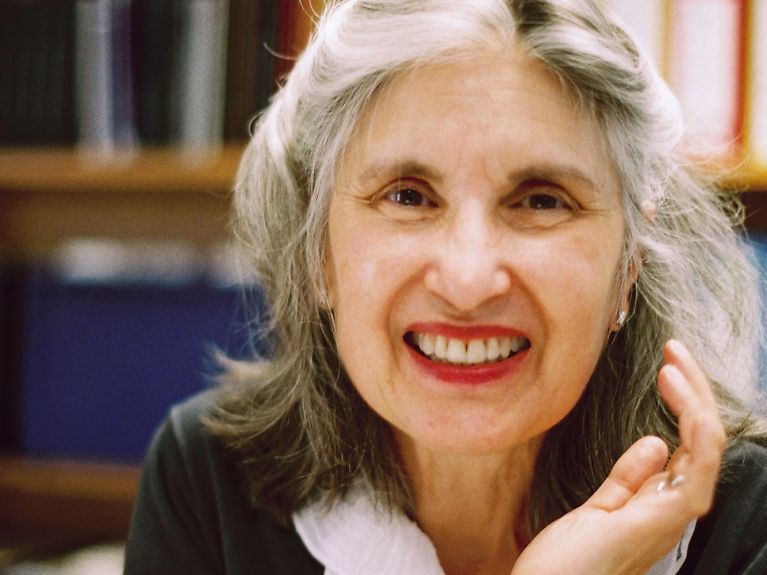
Lorraine Daston, Director emerita of the Max Planck Institute for the History of Science, talks about a country in a process of change.
“In the past 30 years since its reunification, Germany has changed enormously. In 1990, I arrived from the US at the tradition-rich University of Göttingen, which had unfortunately become quite provincial after its past glory days before 1933. But like this University, the German science and research landscape has internationalized very successfully in the past fifteen years and increasingly attracts some of the best young scholars and scientists from all over the world. For almost a decade now, the German science system has also been working seriously on gender equality, after neglecting the problem for a very long time.
German reunification confronted both West and East Germans with their different values and aspirations; there is still an ongoing discussion of what it means to be German. And not only between West and East Germans: today, a fifth of the German population comes from an immigrant background. Moreover, young Germans of all backgrounds are studying and working across the European Union. All of these forces are reshaping German identity.
In Berlin, the generation of citizens who carried a map of the divided city within their head, is gradually fading and with them memories of the city’s past. But I truly treasure the city’s awareness that history matters deeply and I hope that this awareness endures.”
Historian of science Professor Lorraine Daston is one of the most internationally acclaimed representatives of the discipline. From 1995 until she retired in 2019, she was Director of the Max Planck Institute for the History of Science in Berlin, having previously taught at the universities of Harvard, Princeton, Göttingen and Chicago.
Any questions? Search with our AI assistant
- How does the political system in Germany work?
- How much does it cost to study in Germany?
- Which traditions and festivals are typical of Germany?
- What is the best way to learn German?
- Who governs Germany?
- Which industries are particularly important to the German economy?
- Which political parties are there in Germany?
- Why is Germany considered a leading exporting nation?
- How do I apply to study in Germany?
- What opportunities does Germany offer international startups?
- How diverse is the German cultural scene, and what role do art, music and literature play?
- What cultural differences are there between Germany's regions?
- Which degree programs and universities are especially popular in Germany?
- How can I find a job in Germany as an international skilled worker?
- Why was Germany divided after World War II?
- What requirements do I need to meet to be allowed to work in Germany?
- Do I need to speak German to work in Germany?
- How high is the cost of living in Germany?
- How does the German healthcare system work?
- What should I keep in mind when moving to Germany?
- How did reunification come about?
- How does Germany deal with its National Socialist past?
- What level of German do I need to study in Germany?
- In which countries is German spoken?


