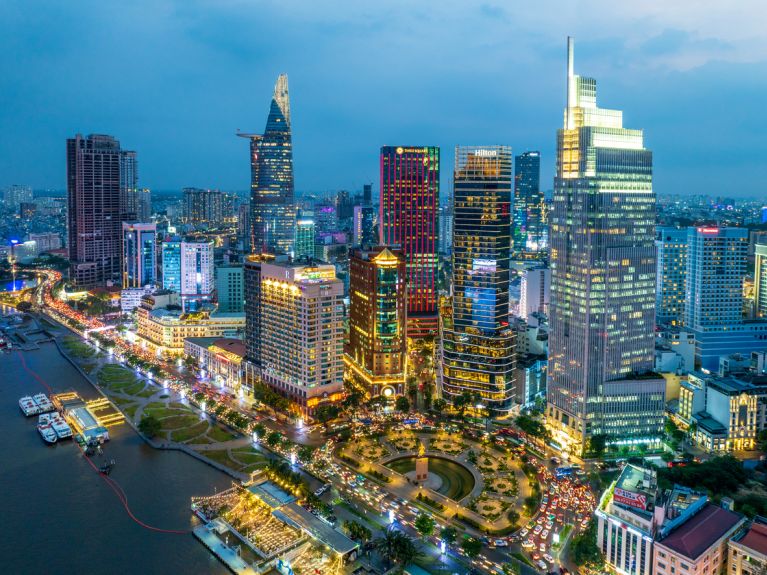
Germany and Asia: new alliances, new opportunities
On course for growth: How Japan, Vietnam and Indonesia are expanding their economic partnerships with Germany.
The world order is changing – and with it trade relations. Germany and many Asian states view each other as promising partners. Countries such as Japan, Vietnam and Indonesia offer good growth prospects, while Germany continues to be valued for its expertise. What opportunities do such partnerships entail for both?
Japan and Germany: shared values and visions
Japan has long been pursuing a strategy aimed above all at reducing its dependence on raw materials from other countries. Trade with Europe plays an important part in this: an export-oriented nation, Japan is one of Germany’s key trading partners in Asia, and vice versa. Currently, around 1,900 Japanese companies are active in Germany, while approximately 730 German firms maintain a presence in Japan.
The two countries complement one another very well.
Their good relations are based among other things on their industrial compatibility and comparable economic structures. “The two countries complement one another very well,” says Shigeki Okamoto, director-general of the Japan External Trade Organization in Berlin. Their ties go beyond trade and are based on shared values and a strategic vision for the future, he explains.
Exchange is now to be intensified. “We see great potential for more intensive trade - especially when it comes to the green and digital transition and modern industrial production,” says Okamoto. The existing EPA/JEFTA trade agreement provides a reliable framework for this, he adds.
Germany and Vietnam: opportunities for digitisation
Vietnam has some ambitious goals: it wants to achieve the status of a high-income country by 2045 and fully decarbonise its economy by 2050. To this end, the government is prioritising annual economic growth of ten percent, to be accomplished by renewable energies, an efficient high-tech industry and expansion of the country’s digital infrastructure.
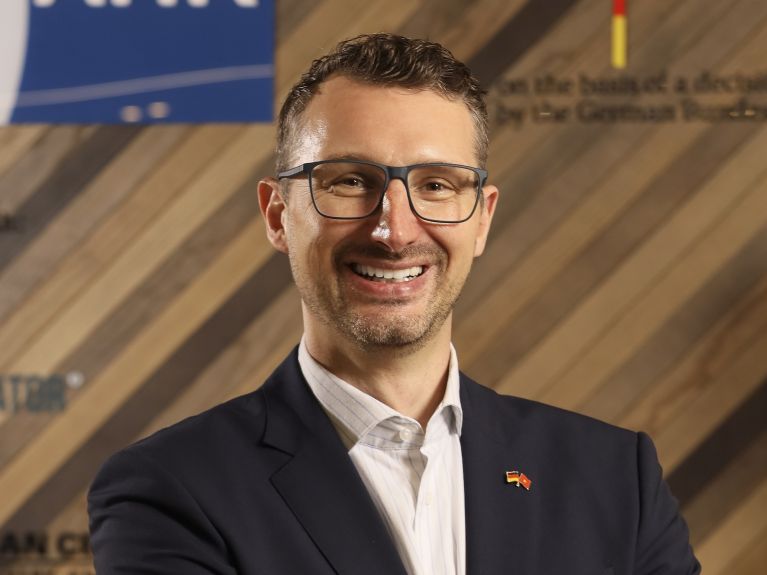
Companies from Germany come into play here. “They boast valuable expertise in areas such as grid expansion, Industry 4.0 and digitisation,” explains Peter Kompalla, chief representative of the Delegation of German Industry and Commerce in Vietnam (AHK Vietnam).
Vietnam has built up an extensive network of free trade agreements in recent years. In January 2026, the European Union (EU) and Vietnam agreed to upgrade their relationship to a comprehensive strategic partnership and to strengthen cooperation in areas such as trade, energy, climate and security. The EU-Vietnam Investment Protection Agreement (EVIPA) is still pending; Germany has already completed the ratification process, but several other EU member states have yet to do so.
The EU-Vietnam Free Trade Agreement (EVFTA), which has been in force since 2020, has significantly accelerated Vietnam’s economic development. As a result, EU investment in Vietnam increased by around 35 percent between 2020 and 2024. Trade with Germany alone grew by more than 16 percent to €22 billion in 2025.
Germany’s particularly strong gains from this growth also have historical roots: the involvement of German companies in Vietnam’s economic opening in the 1990s continues to have an impact today. In addition, the recruitment of Vietnamese skilled workers and various transfer projects have contributed to a positive image of Germany in Vietnamese society.
Indonesia: Germany’s most important trading partner in the region
Indonesia, which is already Germany’s most important trading partner in the region, is seeking more strategic autonomy and to this end recently joined the BRICS group of countries. At the same time, it has stepped up its cooperation with the G20 and the Organisation for Economic Co-operation and Development. It has also signed partnership agreements with the US and Russia. In an increasingly multipolar world, Indonesia is prioritising political room for manoeuvre.
The government wants to tap into additional markets by signing a series of trade deals. In 2025, for example, Indonesia and the EU concluded a Comprehensive Economic Partnership Agreement and an Investment Protection Agreement. This gives Indonesia access to a highly standardised market, while Europe benefits from access to raw materials, a young and tech-savvy population and a rapidly growing market.
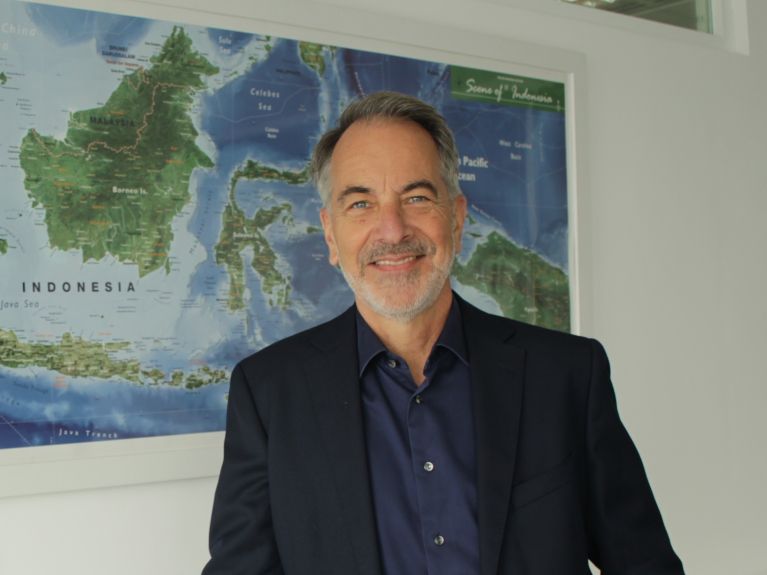
Against this backdrop, Germany wants to expand economic cooperation between the two countries. In turn, Jakarta wants more commitment from Germany to allow it to remain independent in a multipolar world. “Germany is synonymous with high tech and could help make industrial processes more efficient and develop renewable energy sources,” says Hans-Ludwig Bruns, country director for Indonesia at GIZ.
Relations between the two countries are not entirely free of conflict, however. EU directives on issues such as deforestation or supply chain monitoring are increasingly opposed by Indonesian politicians, who view them as obstacles to trade. In this context, they are exhibiting the greater political self-confidence they have acquired as a result of growing trade and economic ties.


