How scientists measure the atmosphere
When satellites, radar systems and AI supply billions of readings, these are used to compile weather forecasts in Offenbach. Insights into the machine room of meteorology.
 Kim Berg
 To find out when the next storm will be sweeping across the North Sea, when Spain will be hit by a heatwave or dust from the Sahara will reach the Alps, all you need to do is glance at an app. The predictions are based on a network of weather stations, satellites and supercomputers. Headquartered in Offenbach near Frankfurt am Main, the Deutscher Wetterdienst (DWD) is part of this network.
How weather data shapes our everyday lives
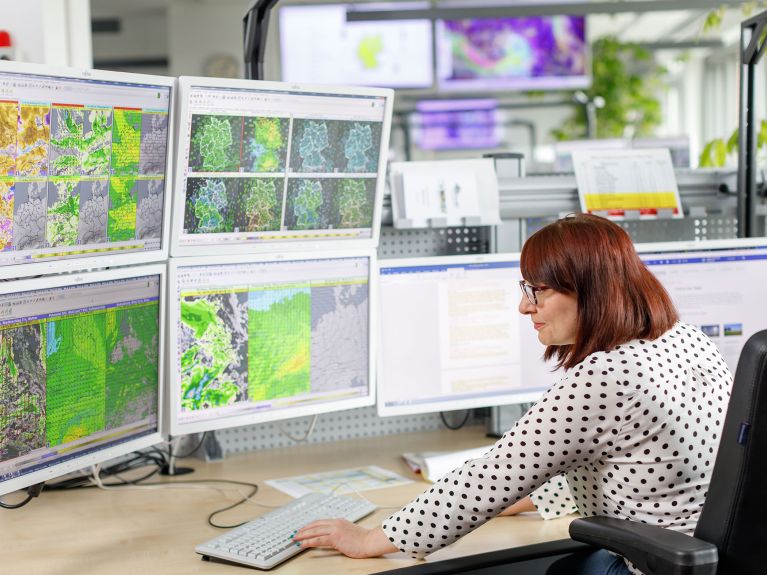
The DWD is Germany’s national meteorological service with more than 2,100 employees. It coordinates weather stations, radar and satellite data and international data networks. At the forecasting centre, meteorologists keep a close eye on the prediction models. New forecasts are spewed out every three hours - and even more frequently in the case of storms.
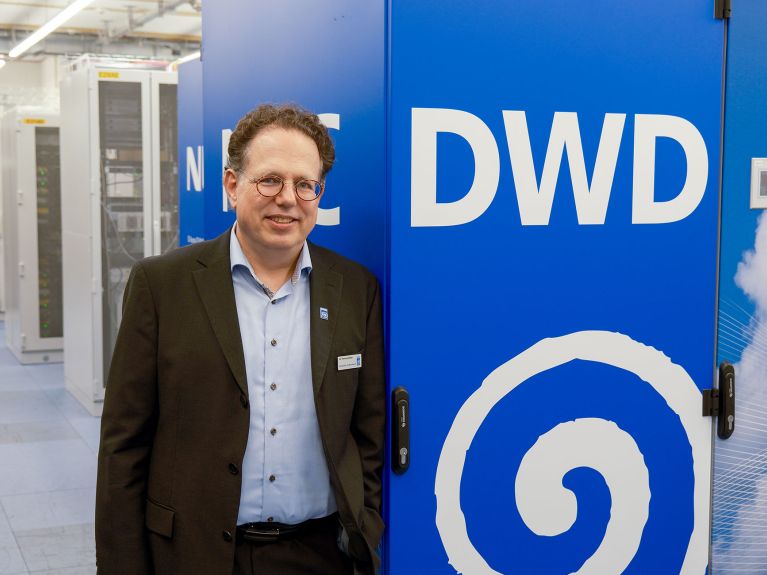
The DWD processes the data using supercomputers that perform billions of calculations per second to simulate physical processes in the atmosphere. “Theoretically, these weather models could be run on a normal computer, too,” says Henning Weber, head of the Information Technology and Operations department at the DWD. “But then tomorrow’s weather forecast might only be ready in two weeks’ time.”
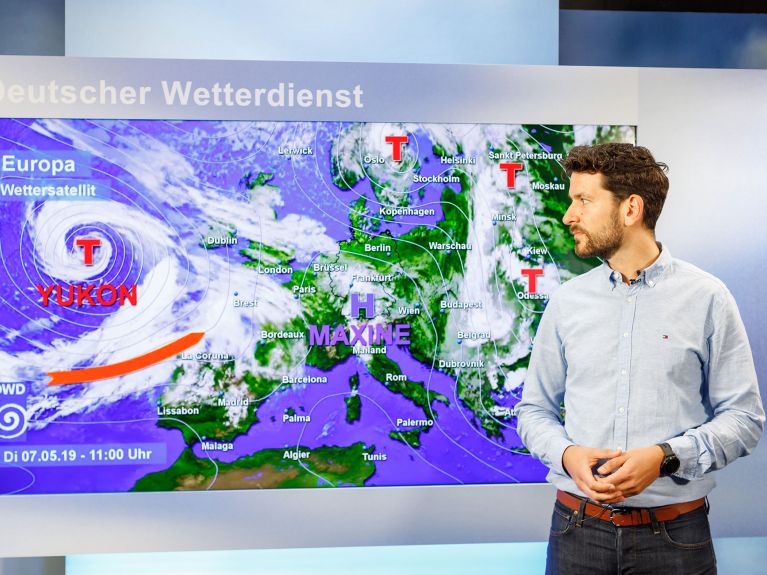
Meteorologists check the models and decide when to issue storm, heavy rainfall or hot weather warnings. The DWD uses the forecasts to inform the media, energy companies, civil protection agencies and aviation authorities. Their predictions also play an important safety role for pilots: no aircraft is permitted to take off without a weather briefing.
Taking advantage of global developments for regional weather forecasting
The DWD is part of a global network. “If we only had weather data for Germany, we wouldn’t get very far,” says Weber. To predict the weather for the next 24 hours, the DWD needs data from all over Europe, while data from across the northern and southern hemispheres is required for multiple-day forecasts.
“Only if I have a precise knowledge of atmospheric conditions worldwide can I calculate how the weather will develop,” explains Weber. “To simulate the atmosphere, the globe is divided up into tiny triangles. For each of these elements, humidity levels, temperature and atmospheric pressure are determined.” Wind is the result of differences in pressure. When moisture is transported, clouds and precipitation form.
International standards for weather data
To ensure that weather data can be used internationally, the World Meteorological Organization in Geneva coordinates the sharing of data between 193 states and defines common standards.
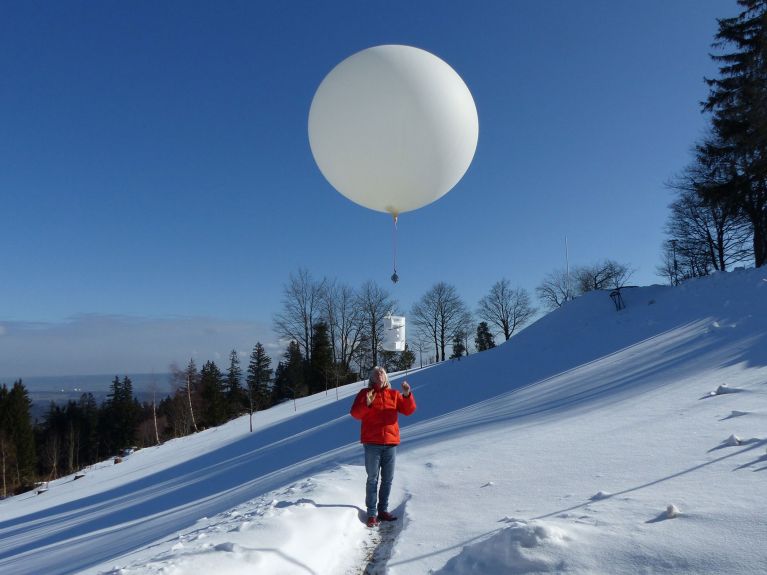
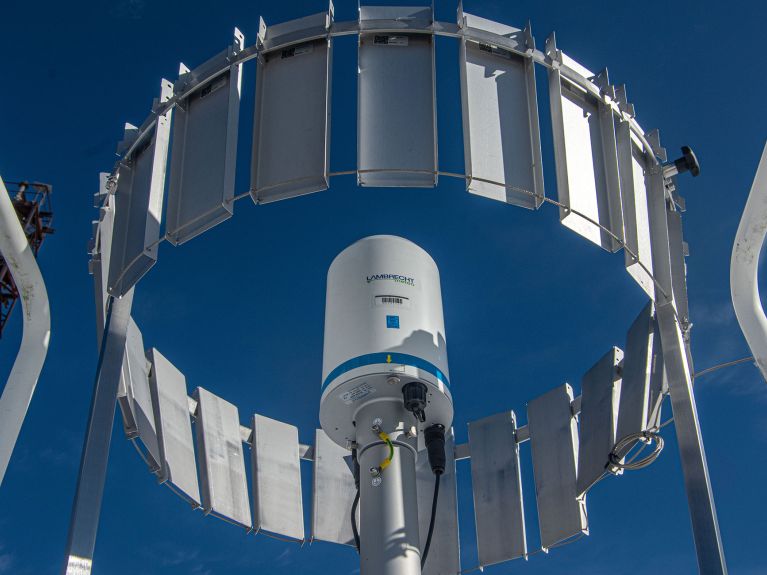
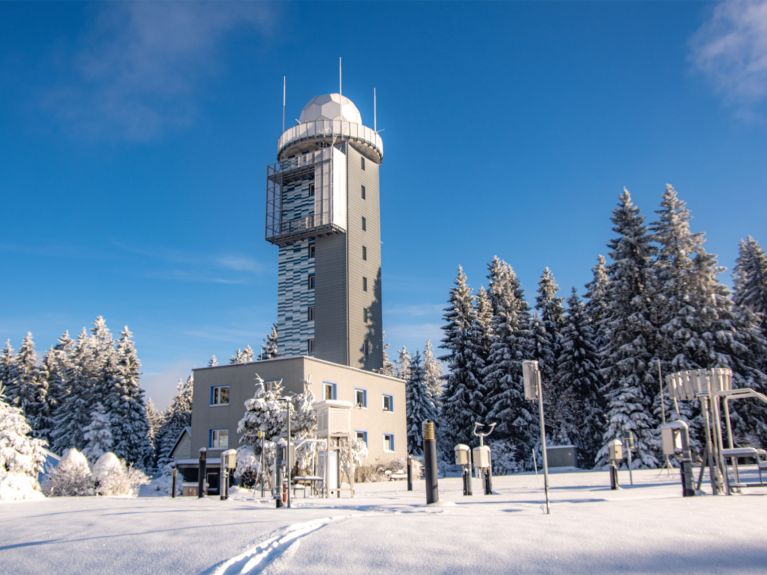
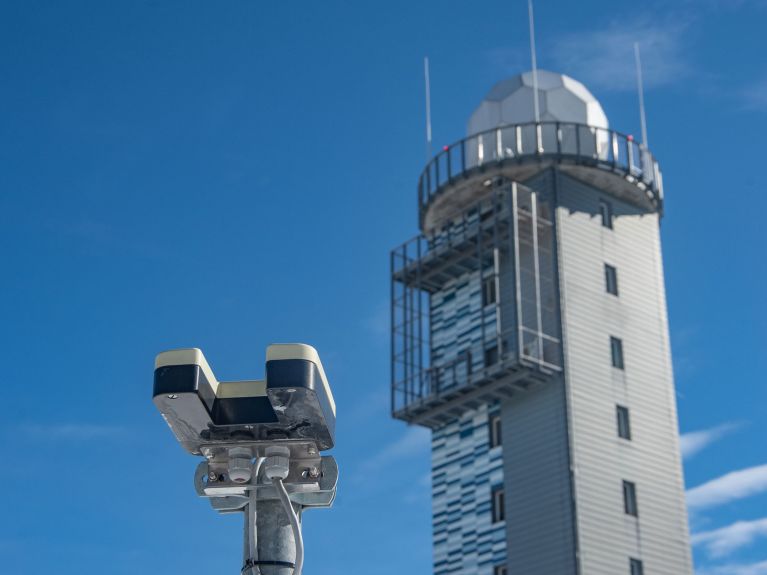
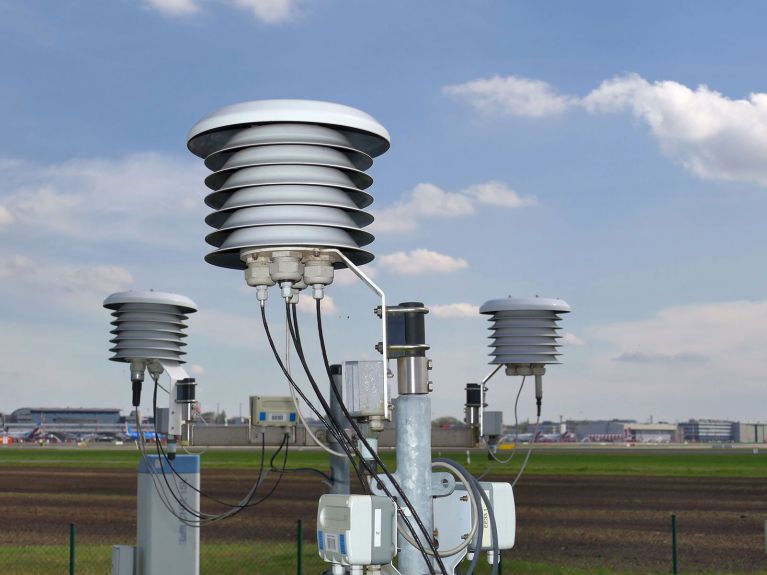
This data is gathered from many different sources: weather stations, satellites, weather balloons, radar and buoys. The DWD operates 18 meteorological radar stations across Germany. Each station records precipitation in a radius of 150 kilometres. They are complemented by more than 180 weather stations that measure temperature, wind, air pressure, air humidity and precipitation.
To obtain cross sections of the atmosphere, the DWD also collaborates with Lufthansa German Airlines. “Lufthansa’s fleet of passenger aircraft is equipped with measurement instruments. Whenever an aircraft takes off or lands, we get a cross section of the atmosphere,” explains Weber. A phenomenon observed during the Covid-19 pandemic reveals just how sensitively this system can react to any data gaps: because fewer passenger aircraft were in service, “weather forecasts became just a little less accurate”, smiles Weber.
Blazing new trails with artificial intelligence
To make forecasting even quicker in the future, the DWD has been working with AICONartificial intelligence since March 2026. Developed in cooperation with European partners, the system uses large amounts of historical weather data to identify patterns in the atmosphere.
Conventional weather models are based on physical equations: supercomputers use them to calculate step by step how temperature, air pressure, humidity and wind levels change in millions of grid cells in the atmosphere. AICON takes a different approach: “To train the AI model, we used 15 years’ worth of historical weather data,” explains Weber. From this data, AICON learnt which patterns typically result in specific weather developments. Rather than simulating each physical process individually, the artificial intelligence identifies statistical correlations that it can use to predict how the atmosphere is likely to develop. This allows forecasts to be compiled many times more quickly - though conventional models continue to serve as a physical reference.
Despite all these advances, humans still play the central role in forecasting. The AI churns out rapid forecasts but meteorologists check the results, compare different models and interpret critical weather conditions. “In critical situations, the advice provided by humans remains crucial,” stresses Weber.
AI systems like AICON are ushering in a new era in meteorology. Conventional physical models and learning algorithms will work in parallel in future. The goal is the same as it has been for decades: to predict the weather more accurately, more quickly and more reliably - so that we humans can prepare in good time for whatever the heavens next have in store for us.


