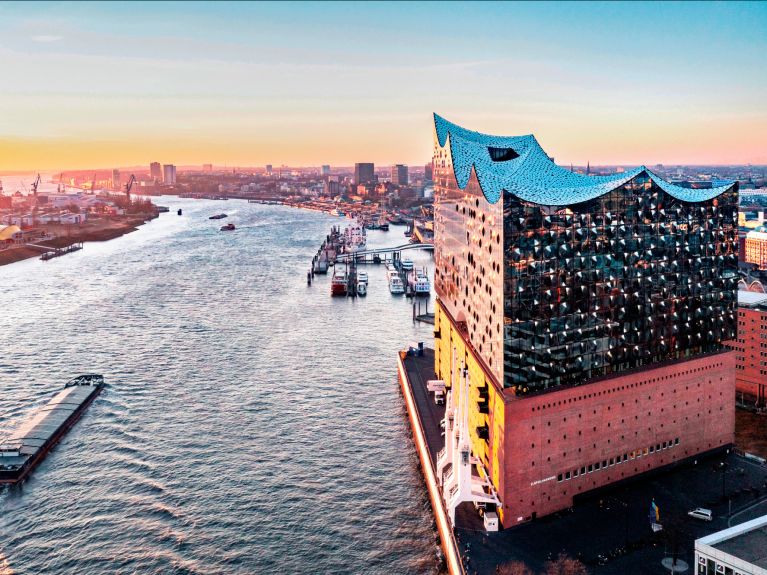
Well-prepared for storm surges
Hamburgs HafenCity was built on Elbe silt and elevated high to protect it from flooding. Its risk management is sophisticated, with four surprising facts.
 Ina Brzoska
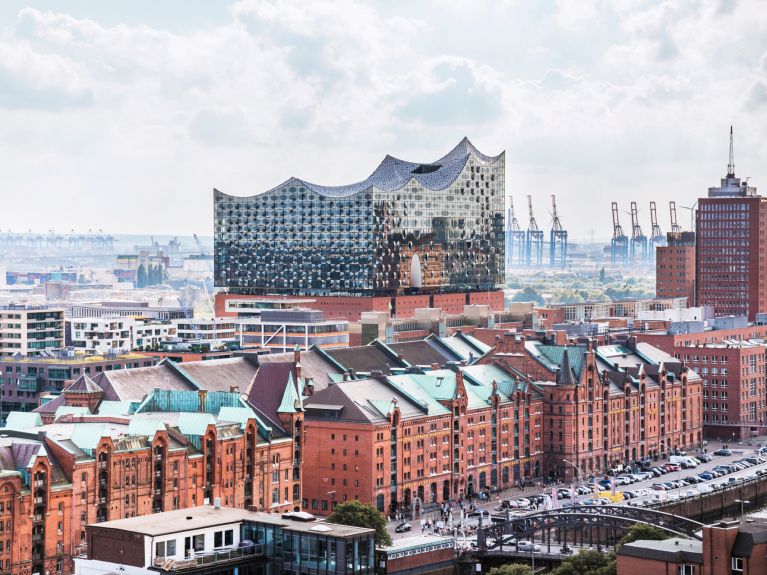
 Ships sound their horns, wind sweeps across the promenades. Anyone walking through Hamburg’s HafenCity will quickly notice the different levels: low paths by the water, high steps, raised streets and entrances. Living with changing water levels is part of everyday life here. This is because one of Europe’s largest new urban districts is being created on a former section of the port in the Elbe floodplain. Four examples show how Hamburg is adapting its urban design to water in this district.
1. HafenCity stands on artificial mounds
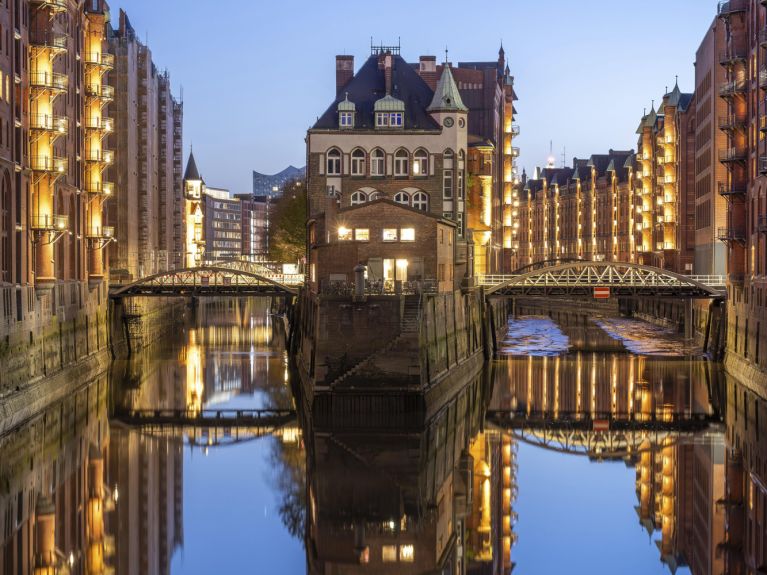
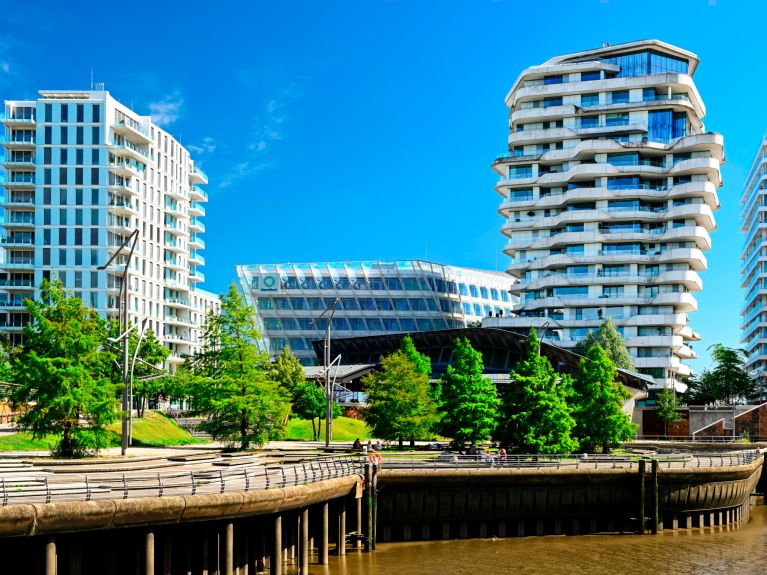
Extensive sections of the new district have been raised. Streets, squares and building entrances are now mostly at 7.80 to 8.50 metres above sea level, significantly higher than the old harbour quays. This is based on a concept involving artificially raised platforms that protect buildings from flooding. In Hamburg, this coastal engineering technique has been applied to an entire district.

2. Parts of the promenade are allowed to be flooded
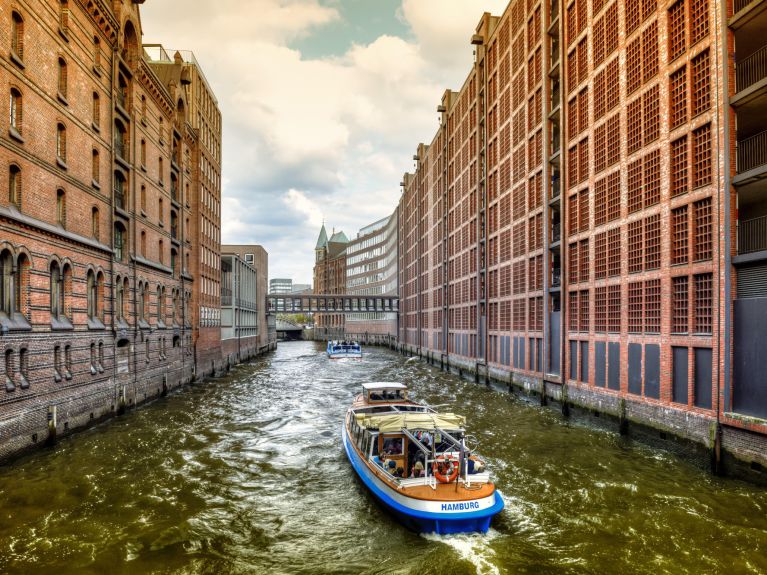
The lower riverside paths directly on the Elbe can be flooded during storm surges. It is only above these that the protected urban level begins: the water is not completely kept out but is deliberately incorporated into the planning. This preserves proximity to the river without obstructing the view with high dikes.
3. Heavy rainfall was also taken into account
Not only storm surges were incorporated in the planning but also heavy rainfall. Green spaces, green roofs and open water areas help absorb rainfall within the district and relieve the drainage system. These water-sensitive elements make HafenCity more resilient to extreme weather. Research into climate-resilient urban and water concepts is also ongoing at HafenCity University Hamburg.
Dieses YouTube-Video kann in einem neuen Tab abgespielt werden
YouTube öffnenThird party content
We use YouTube to embed content that may collect data about your activity. Please review the details and accept the service to see this content.
Open consent form4. The Elbphilharmonie stands on 1,111 concrete piles
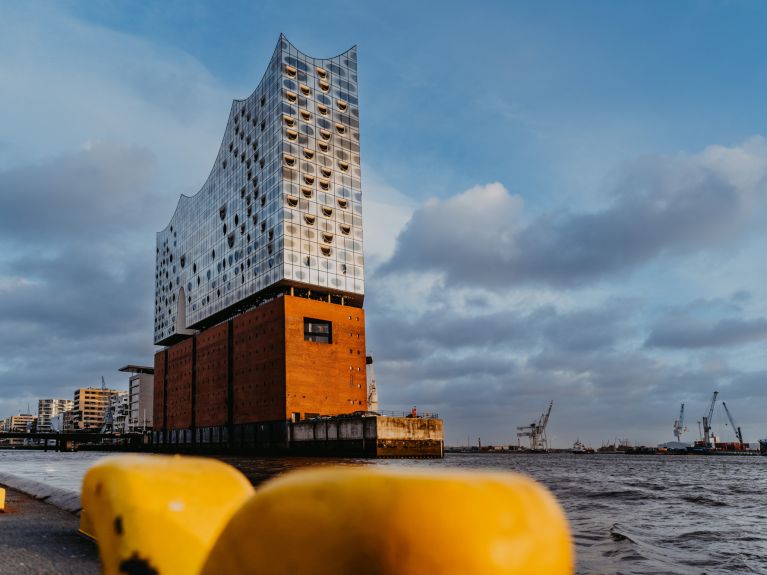
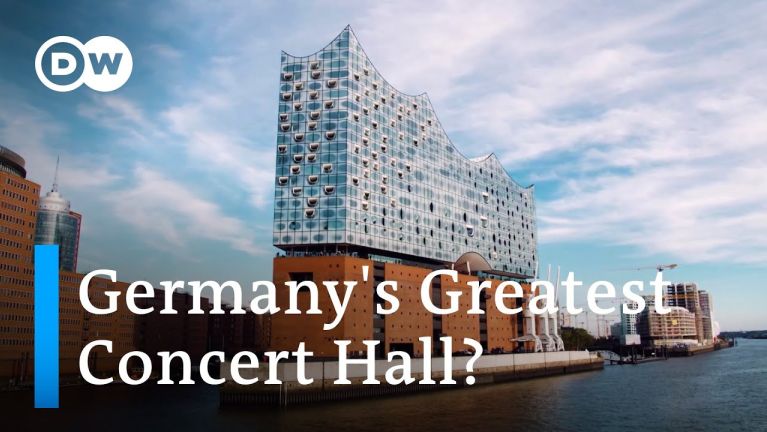
Hamburg’s best-known new landmark has been attracting huge numbers of visitors for years: more than 25 million people have visited the Elbphilharmonie Plaza alone since it opened in 2017. The concert hall was built on top of the former Kaispeicher A, where cocoa, tea and tobacco were once stored. Its foundations rest deep in the Elbe silt on 1,111 concrete piles. As such, even the district’s most famous building shows how construction in HafenCity is able to tackle difficult ground conditions.


