“You can taste the slate soil in every sip”
How is it even possible to harvest the grapes at the Bremmer Calmont? A winegrower talks about painstaking manual labour, exceptional Riesling wines and climate change.
 Luca Rehse-Knauf
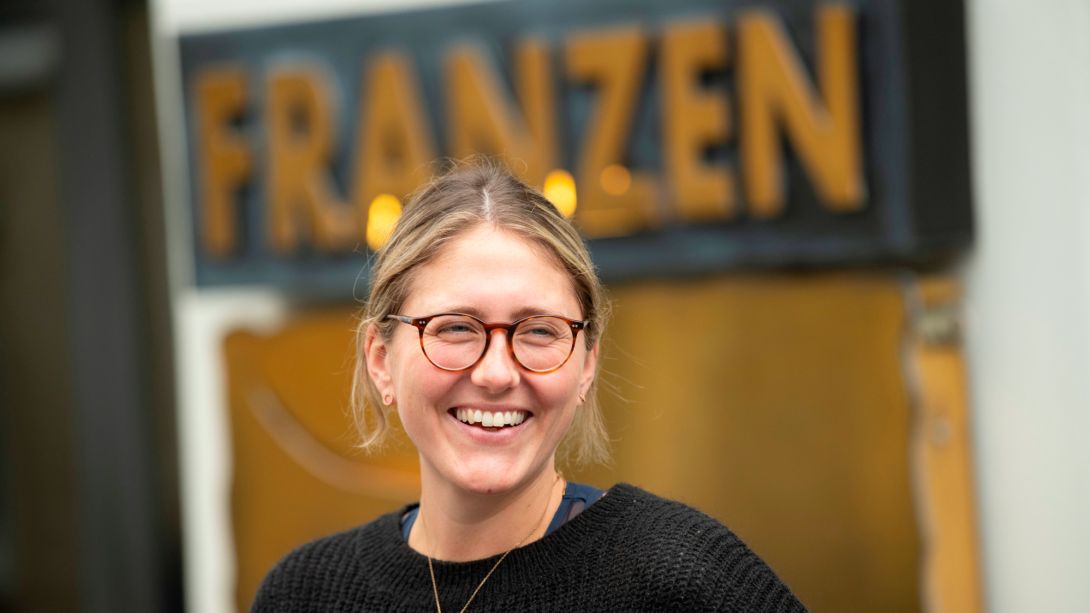
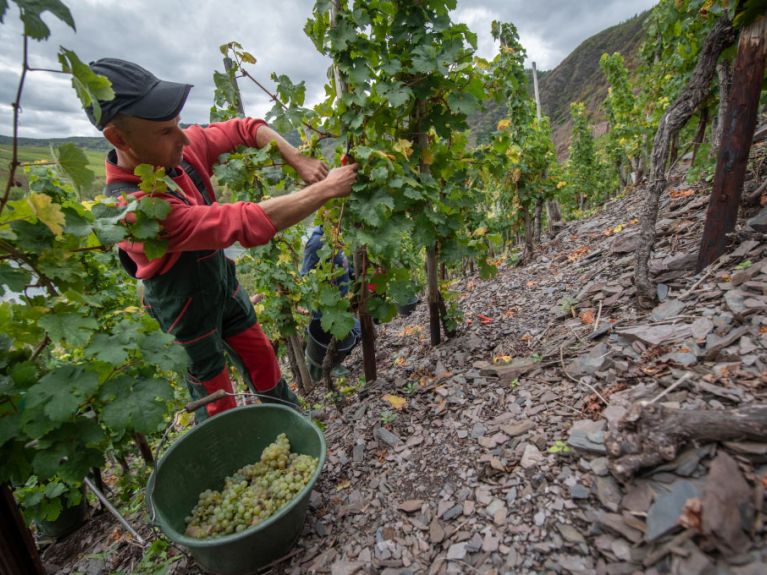
The steep slate slopes make for painstaking manual labour: Angelina Franzen and her family grow wine at the Bremmer Calmont by the Mosel river in Rhineland-Palatinate.
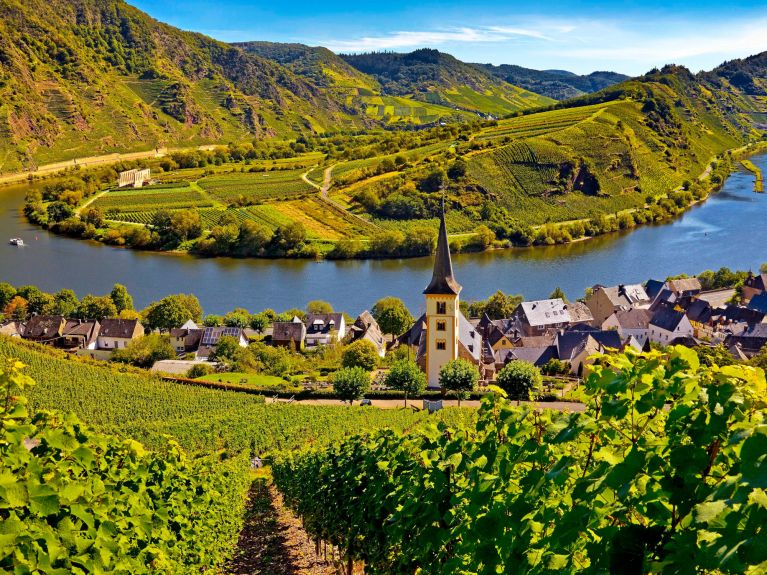
Ms Franzen, the Bremmer Calmont features a gradient of up to 68 degrees. How does one even grow wine on such a steep slope?
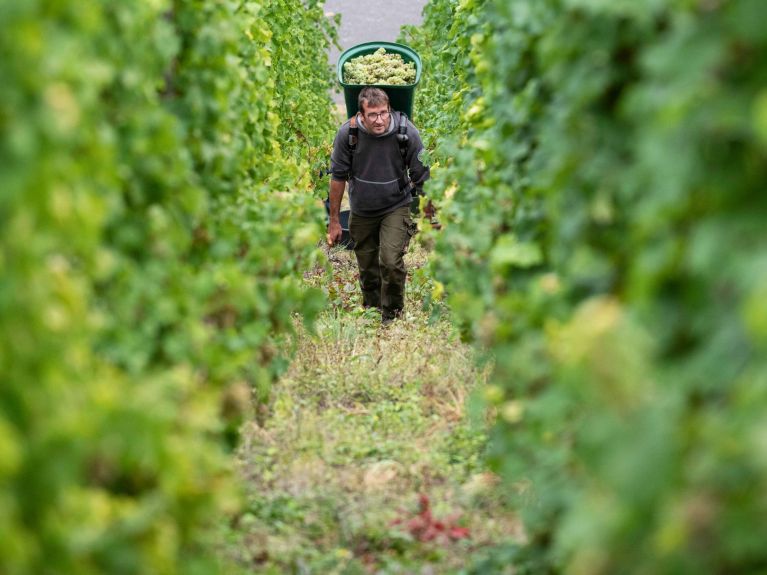
We do absolutely everything by hand here. We need far more people to help with the harvest than would be necessary on a level vineyard - and they need to be sure-footed and have a good head for heights. Harvesting an acre on level land takes roughly 200 hours of work, compared with around 1,200 hours on our steep slopes. This drives up the costs but also ensures wines of exceptional quality.
What sets the Calmont Riesling apart?
First and foremost, its pronounced minerality. You can taste the slate soil in which the grapes grow in every sip. It is also particularly powerful and aromatic. The south-facing slopes, the minimal shade and the wind mean we can get the very best out of our grapes.
Cultivation of parts of the Calmont vineyard was abandoned in the 1980s and 1990s. Why?
Many areas were left fallow because it was too laborious and expensive to cultivate them. My father-in-law recultivated large parts of the Calmont. He felt it was important to do so because winegrowing at the Bremmer Calmont has been a tradition in our family for many generations. He first had to remove old vines, trees and blackberry and raspberry bushes. Then the plots were replanted. It took three years to restore just 1.5 hectares.
These days, climate change is once again transforming conditions. What are you observing at the Calmont?
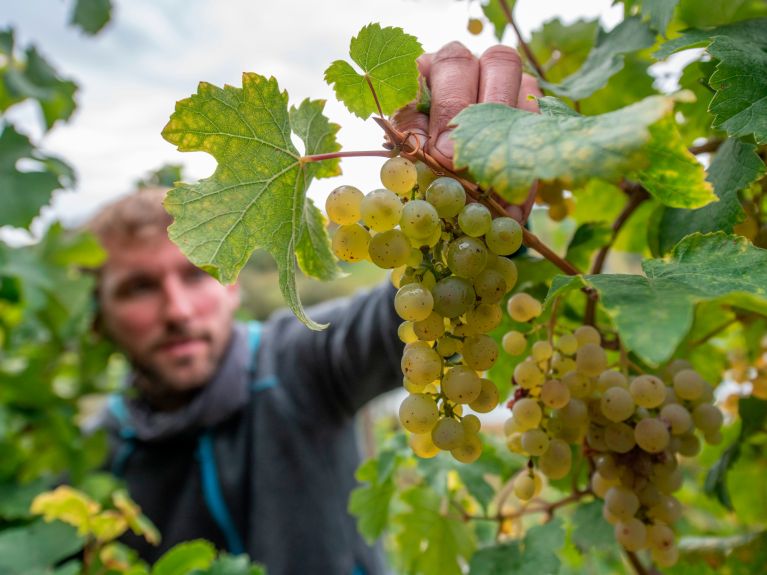
Because of the higher temperatures, the grapes are ripening earlier, contain more sugar and ultimately have a somewhat higher alcohol content. We therefore have to adjust the timing of the harvest and pick the grapes much earlier than we did a few years ago. At the same time, this presents new opportunities: in the past, you needed steep south-facing slopes to get good grapes. They would often not ripen properly on east- or west-facing slopes. That has now changed and we can also produce good-quality wines there, too.
Angelina Franzen and her husband Kilian run the Franzen family vineyard in Bremm. The business has been family-run for five generations. The vineyard is particularly known for its Riesling wines from the slate hills of the Mosel valley.