Speed meets precision: this is the new German-Israeli cyber alliance
Cyberattacks on electricity grids, companies and government agencies are on the increase. A research project is developing strategies aimed at better protecting critical infrastructure.
 Anja Leuschner
 Cyberattacks on energy providers, industry or state IT systems are posing an increasing threat to critical infrastructure. Israel often develops quick and practical solutions in response, while Germany has strengths to contribute in research and system architecture. At the National Research Center for Applied Cybersecurity ATHENE, Haya Schulmann and Tal Shapira are working to combine these two approaches.
Ms Schulmann, cyberattacks are on the rise worldwide and are becoming increasingly complex. To what extent are existing defence strategies reaching their limits?
Haya Schulmann: Our defence strategies to date have tended to rely mainly on our knowledge of threats - knowledge gained as a result of past attacks. At ATHENE we are developing methods aimed at identifying and halting attacks even while they are still at the preparation stage. A cyberattackdoesn’t happen suddenly - it requires a technical infrastructure that needs to be set up as inconspicuously as possible. This process leaves traces online and in the IT systems of the later victims, traces that we can find and interpret.
You are working on this together with researchers in Israel. Why?
Israel has many strengths in this area: researchers there work to combat specific threats. This forces them to quickly find solutions and defence mechanisms to address these new attacks.
Mr Shapira, you are part of the Israeli team. Which is your most pressing project at present?
Tal Shapira: At the moment, one of our most important objectives is to make critical infrastructure more secure - especially the energy sector. To achieve this, we need the core competencies of both countries: Israel has extensive operational experience in the defence of critical systems under real threat conditions, while Germany boasts top-class expertise in developing resilient and standards-based technical environments. The goal of our collaboration is to combine these complementary strengths to develop bespoke cybersecurity solutions for the energy sector.
What do you see as the advantages of the cooperation?
Shapira: I’ve seen in workshop discussions how productive it can be to combine the two approaches. We Israelis brought to the table our practical experience of threats and of rapid analyses of attack methods – experience shaped by working in one of the world’s most attacked cyber environments. The German researchers contributed methodological validation and raised the question of how a solution would respond in a real-world system over time. Combining these two approaches was constructive because it involved complementing Israeli innovation with Germany’s consistent focus on long-term reliability.
Why do you focus particularly on the energy sector?
Schulmann: The energy sector is vital for national security. These days nothing works without power, so electricity grids are a strategic target that may determine the outcome of a war. Such attacks are not about stealing or corrupting data, but about physical impacts. Every area of our daily life functions only thanks to electricity – communication, the financial sector, logistics, healthcare. If there’s a failure in one sector, this can trigger a chain reaction that can put human lives in danger - for instance if hospitals cannot function due to a power outage and system failures.
What can we in Germany learn from the way the Israelis work?
Schulmann: Israel quickly translate attack scenarios into functioning systems and countermeasures. Researchers analyse how the attackers work, and then respond. In Germany, work starts with a paper that has to be written and published before the implementation phase can begin. Our strength lies in basic research – we can learn from our Israeli colleagues when it comes to rapid implementation.
Shapira: This learning process works in both directions: Germany profits from Israel’s start-up-driven innovation culture and our experience in defending ourselves against complex and persistent threats in real time. Meanwhile, Israel can learn from Germany’s discipline in setting up systems that meet strict compliance and reliability standards. Together, we develop solutions that aren’t only innovative, but are also trustworthy and scalable.
Which other topics do you plan to collaborate on in future?
Schulmann: AI is a key topic for us. What are known as AI agents are of particular interest. These are programs that perform tasks autonomously - like writing e-mails, analysing data or controlling software. No company would hire an employee without checking him or her out first. This happens often with AI agents, however. Firms give them access to sensitive data without knowing exactly how secure they are. This can give rise to considerable security risks.
Shapira: AI agents create a new potential threat scenario: cyber risks are becoming quicker, more autonomous and more complex. It is precisely this type of problem that the German-Israeli cooperation can help resolve in a very practical manner because it combines rapid innovation with rigorous attention to security and trust.
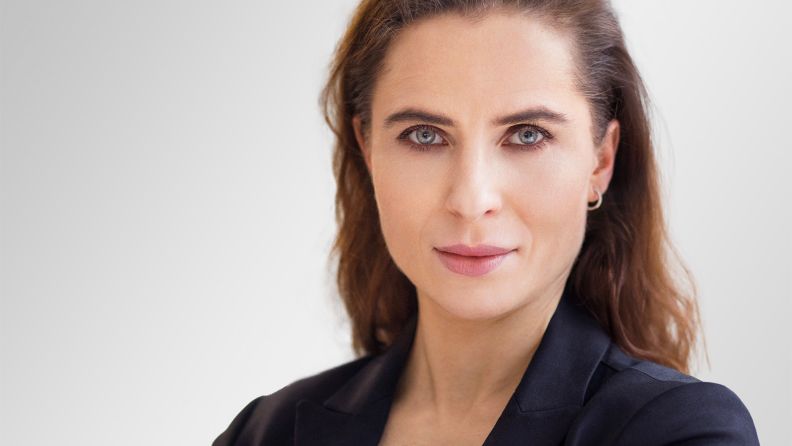
Professor Haya Schulmann is a German-Israeli professor at the Institute of Computer Science at Goethe University Frankfurt am Main and a member of the board of the National Research Center for Applied Cybersecurity ATHENE.
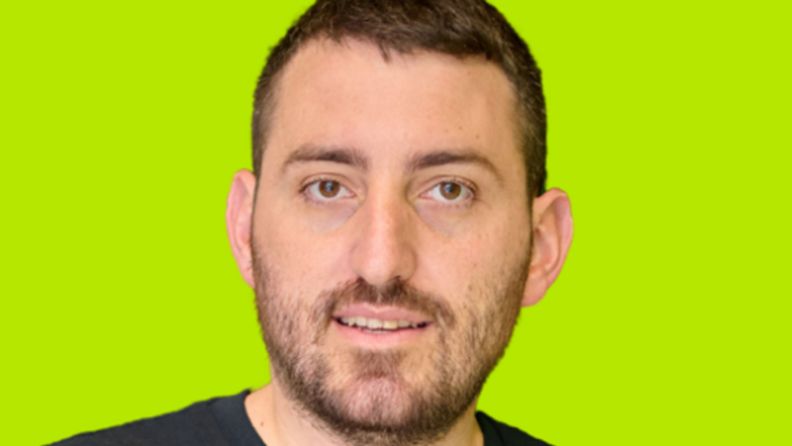
Dr Tal Shapira is co-founder and chief technology officer of the start-up Reco. He studies how companies can use AI functions and agents safely and securely.
Both researchers work in a cooperative research department of the National Research Center for Applied Cybersecurity ATHENE and of the Israeli Ministry of Energy and Infrastructure that aims to develop solutions for urgent cybersecurity issues in the energy sector.


