
Why German bicycle makers dominate the world market
The industry has a long-standing tradition. German companies still have high export ratios, for excample in the gravel, e-cargo and premium sectors.
 Wolf Zinn
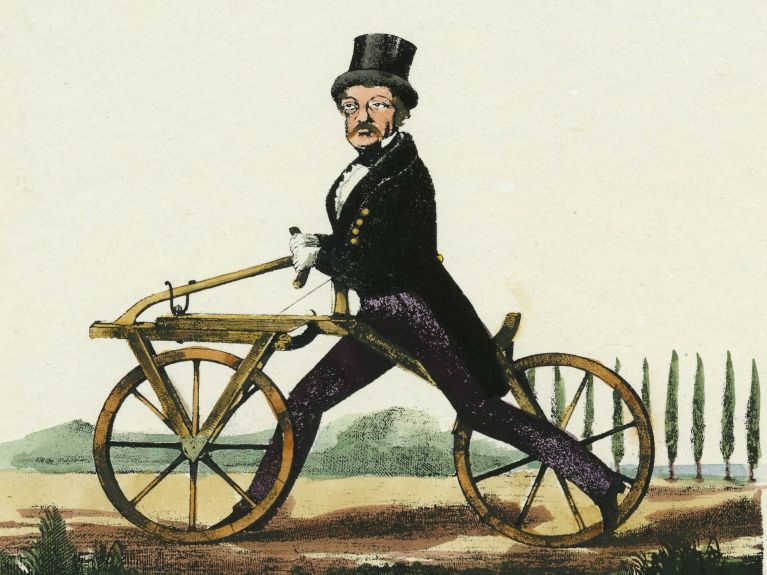
 Anyone who hurtles down a rough track on a mountain bike or chauffeurs their kids to nursery on an electric cargo bike is in some sense always continuing a proud German tradition. After all, the earliest form of the bicycle, known as the draisine, was invented in Germany in 1817 and marked the dawn of individual two-wheeled mobility. The industry it led to has long since become an important economic factor in Germany.
Over 90 million bicycles - of which 17 million are e-bikes - are used on Germany’s roads, cycle paths and tracks. Every year, the country’s nearly 500 manufacturers and more than 10,000 dealers sell just shy of 3.8 million bicycles, including two million e-bikes. In 2025, German cycle manufacturers exported almost 1.4 million bikes abroad. The German bicycle industry employs around 200,000 people. Sales of conventional and electric bicycles generate an annual turnover of nearly six billion euros.
Which bikes are on trend just now?
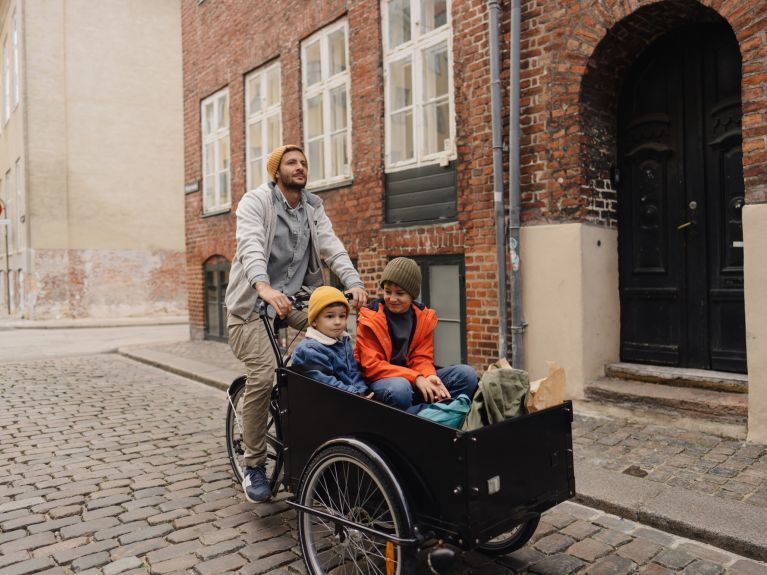
Trekking bikes are the most popular type of bicycle in Germany, accounting for a 38 percent share of the market. Mountain bikes account for roughly 21 percent - these days, the majority are battery-powered. City bikes are in third place with 14 percent of the market. Gravel bikes have seen their popularity surge in recent years and now account for a ten percent market share. They are seen as symbolising a new desire to cycle at speed on all terrains - along roads, forest tracks and bikepacking routes. Cargo bikes still account for only a relative small two percent of the total market.
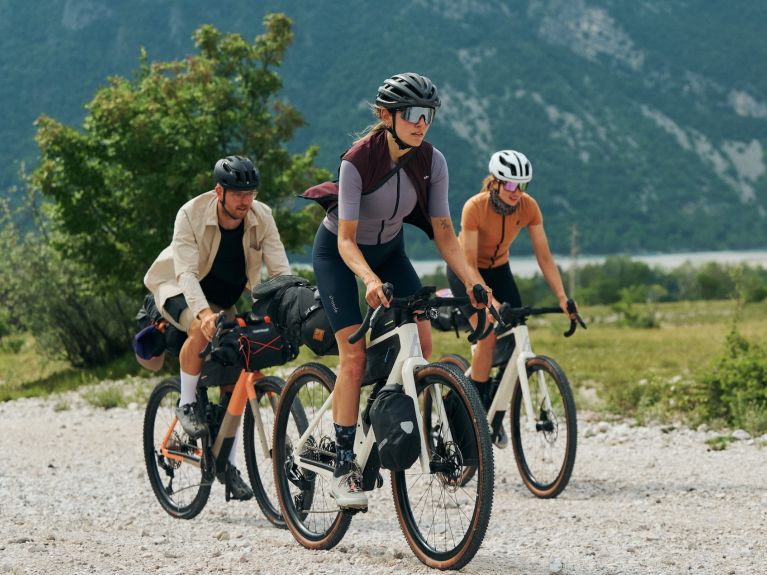
Mountain bikes remain as emotionally charged as ever, while road and high-performance bikes are equipped with increasingly sophisticated technology in the high-end segment – and can easily cost several thousands of euros. Innovative materials are making bicycles ever lighter, more stable, more comfortable and more sustainable – with everything from carbon rims made by German manufacturers to bamboo frames, robust aluminium e-bikes and steel-frame bikes with 3D-printed components.
Brands that can be experienced worldwide
Many German manufacturers are internationally successful – such as Canyon, Rose and Cube. They offer a wide range of different bikes, from entry level to high end. Riese & Müller and Muli are examples of brands that have made a name for themselves in the cargo bike sector. German bike accessories are also popular around the world: Ortlieb for instance claims to be the global market leader when it comes to waterproof bike bags. Firms like Vaude, Gonso, Ryzon and Maloja all make specialist cycling apparel.


