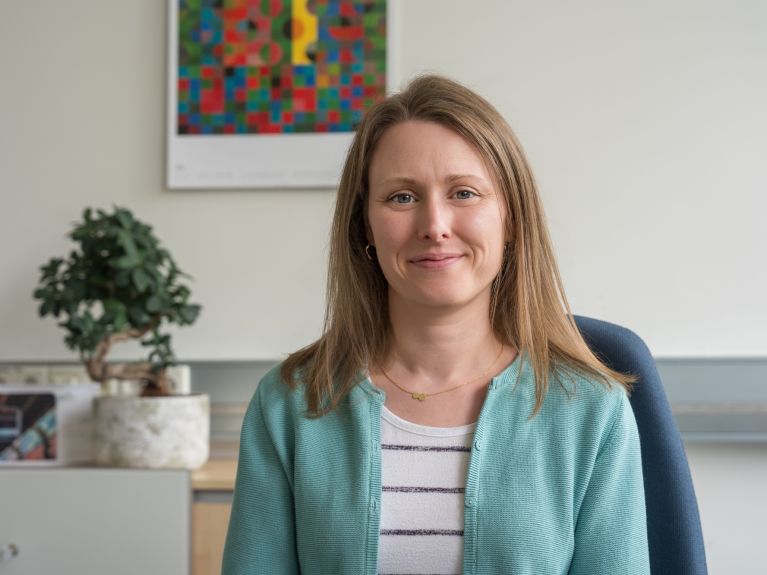
"Someone suddenly suggested: let’s cycle to dinner"
At Wuppertal University, Professor Heather Kaths specialises in bicycles. She appreciates their appeal, but not the endless car-versus-bike debate.
 Interview: Clara Krug
 Heather Kaths is a civil engineer and transport scientist from Canada. Since April 2021, she has held the Chair of Cycling at the University of Wuppertal, where she conducts research into data, behavioural modelling and traffic simulation.
Professor Kaths, you first came to Stuttgart from Canada as a student. What surprised you most about transport in Germany?
At that time, transport in Canada was heavily car-oriented, and I drove everywhere in my day-to-day life. In Stuttgart, I experienced the exact opposite. I was impressed by how natural it was for people to use public transport. As a student, I found it easy to get around the city without owning a car. The biggest revelation was the bicycle. Someone asked me whether we should cycle to dinner – not as a sport, but simply as a means of getting around. For me, it was a completely new world. What I particularly took away from lectures and discussions at the University of Stuttgart was this: the focus shifted away from cars and towards people – towards the question of how mobility systems can serve people’s needs.
How do you get around today?
I live in Wuppertal, a hilly area. So it’s not a classic cycling city. I walk a lot, but I also cycle, use the suspension railway and occasionally drive – a real mix. It was very different before that, in Munich: for eleven years, whenever the weather was fine, I travelled almost exclusively by bike.
How do people regard cycling in Germany?
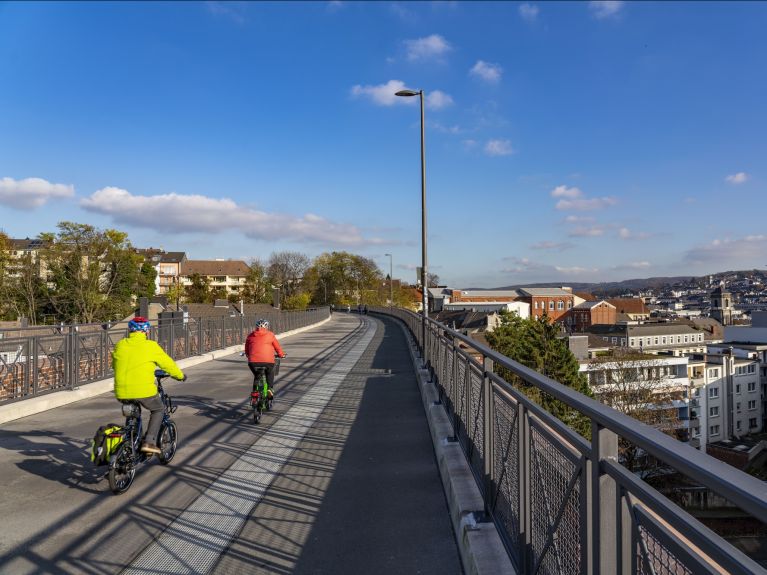
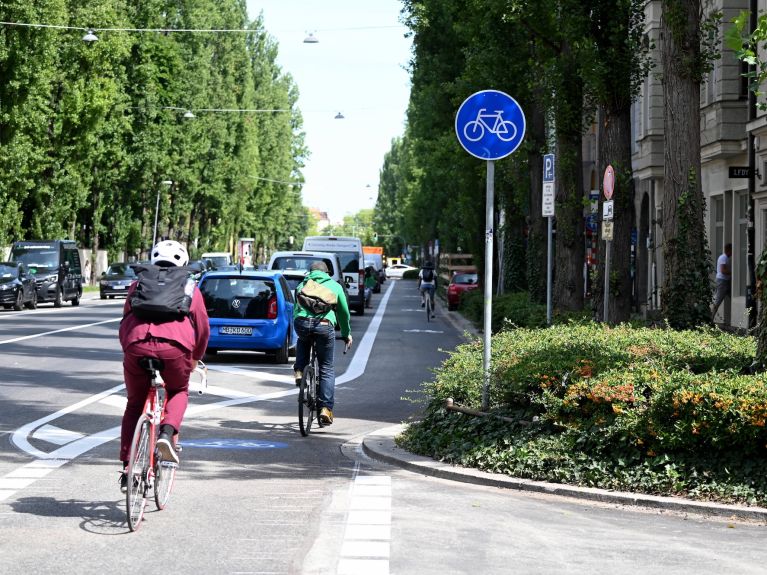
Cycling is taken seriously as a mode of transport. For many people, it is part of their everyday life – whether for shopping or taking the kids to nursery. The most important feature of a successful cycling city such as Munich is a continuous and safe network. In Wuppertal, a former railway line was transformed into a cycling and walking route as a result of the efforts of local citizens’ initiatives. Forward-looking concepts include cycle highways: these are being developed in many regions and make longer-distance commuting by bike more attractive.
Which people and situations are the focus of your research?
My research draws on insights from behavioural science, street design and technology development. I am driven by the question of how we can design infrastructure and technology so that cycling is safe for as many people as possible – and also feels attractive. Another aspect is the social dimension. Cycling is often a group activity: couples who want to chat, parents riding alongside their children. That requires a very different approach to designing public space.
Which international cities are good role models?
Paris is incredibly inspiring. The city demonstrates what political determination can achieve – when supported by the public – and how quickly urban space can be reallocated in favour of people and bicycles. Creative ideas such as bicycle lifts for steep hills in Norway are also fascinating. And I always like to mention my home city of Calgary, because it demonstrates that even in the most challenging conditions – cold weather, hills and long distances – it’s possible to establish cycling as a normal part of everyday life.
What do you hope for the future of cycling?
I don’t dream of a completely car-free city – I occasionally drive myself! But it is the mix that matters. Different modes of transport should be used where they work best: short journeys on foot or by bicycle, longer ones using excellent public transport. That’s how we can create more liveable cities with more space for people – and more car-free areas that provide room for greenery, play, leisure and social interaction. What bothers me is this constant “drivers versus cyclists” debate. At the end of the day, we’re all just people trying to get from A to B. Let’s work together to find solutions that give everyone a safe place on the road.


