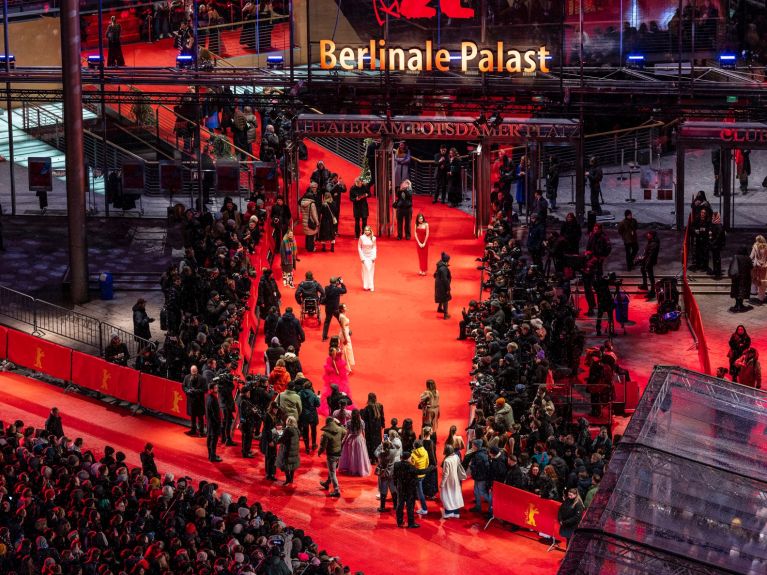
Berlinale 2026: The bear hunt is on
With stars and visitors from around the world, Berlin is once again transformed into a film metropolis. The Berlinale stands for diversity and lively debate.
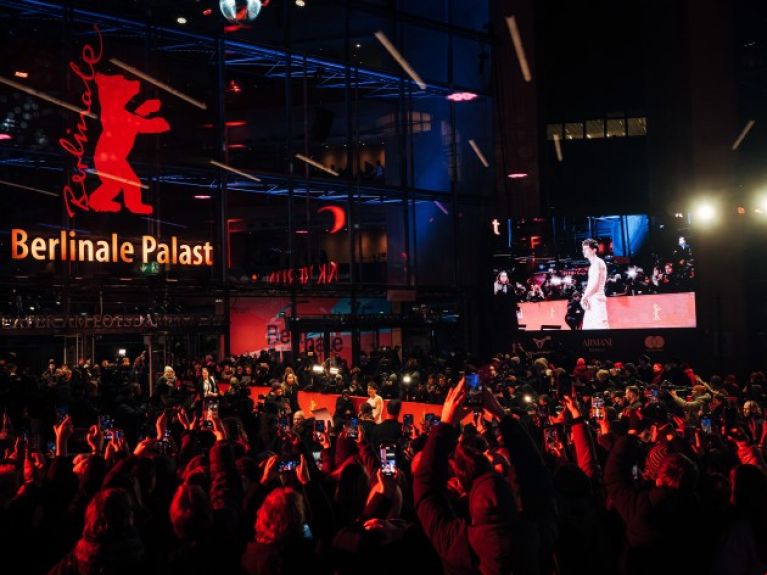
In wintry grey Berlin, the red carpets are rolled out – the 76th Berlinale is once again transforming the German capital into a film metropolis. In contrast to the festivals in Cannes and Venice, the Berlinale, founded in 1951, focuses particularly on relevant themes. Festival director Tricia Tuttle stressed at the programme presentation that the competition brings together established filmmakers with a clearly recognisable artistic signature.

Dieses YouTube-Video kann in einem neuen Tab abgespielt werden
YouTube öffnenThird party content
We use YouTube to embed content that may collect data about your activity. Please review the details and accept the service to see this content.
Open consent formBerlinale 2026: a focus on the personal
This year, most entries do not revolve around trending political themes such as Trump, racism, climate change or the rise of the new right. Instead, many stories focus on the personal matters and the family sphere. In the new film by Hungarian director Kornél Mundruczó, At the Sea, starring Amy Adams, a woman must confront her identity and life choices after completing rehab. It is the Hungarian’s second film with a Hollywood ensemble, following Pieces of a Woman (2021).
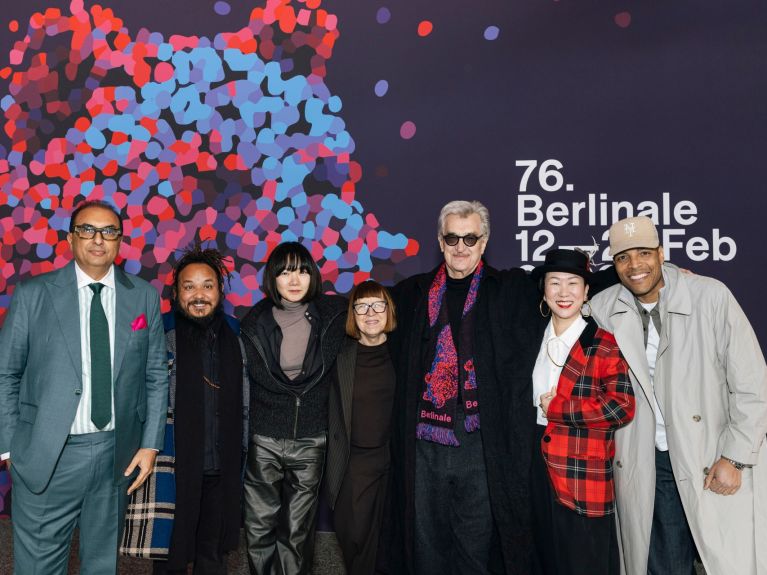

Stars in competition: Amy Adams, Elle Fanning, Channing Tatum
The social satire Rosebush Pruning by Brazilian director Karim Aïnouz boasts a high-profile cast – including Elle Fanning, Pamela Anderson and Jamie Bell, as well as Elvis’s granddaughter Riley Keough. The film tells the story of four siblings who uncover a family secret.

Dieses YouTube-Video kann in einem neuen Tab abgespielt werden
YouTube öffnenThird party content
We use YouTube to embed content that may collect data about your activity. Please review the details and accept the service to see this content.
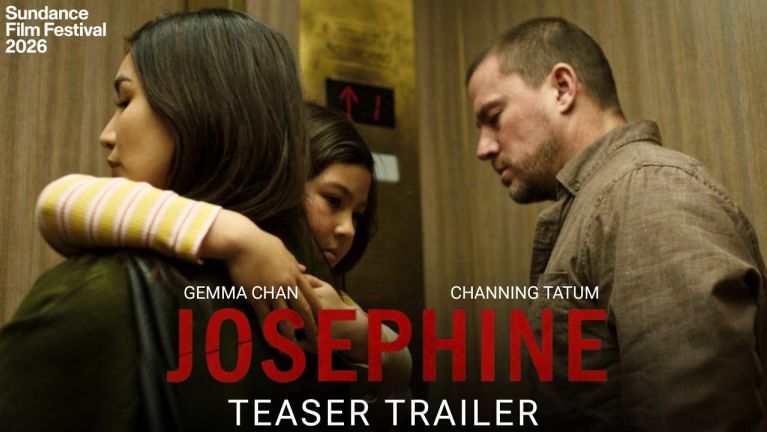
Open consent formIn the highly anticipated entry Josephine, screening in the Berlinale Special section, Channing Tatum plays a father whose eight-year-old daughter witnesses a violent crime.
Dieses YouTube-Video kann in einem neuen Tab abgespielt werden
YouTube öffnenThird party content
We use YouTube to embed content that may collect data about your activity. Please review the details and accept the service to see this content.
Open consent formA winter public festival: 330,000 tickets, open cinemas
There may be fewer stars than in Cannes or Venice, but the Berlinale makes the most of their appearances – sometimes at controversial press conferences. Its deliberately less glamorous profile creates space for directors from countries that rarely take centre stage.
The Berlinale has always seen itself as a festival for the public at large. No other major A-festival sells as many tickets to ordinary cinema-goers; in 2025 there were around 330,000. Unlike Cannes or Venice, cinema here is not an exclusive industry gathering but part of the city.
From an East–West stage to a global festival
This year’s programme again shows Berlin to be broader in scope than many competitors. Alongside the competition itself, sections such as Panorama and Forum carry international weight. Panorama is regarded as a key platform for queer cinema, while Forum is a space for aesthetically radical and experimental works.
Both before and after the fall of the Wall, the Berlinale was a showcase for films from Eastern Europe. In the divided city, these reached a large Western audience and international distributors for the first time.
German cinema has regained confidence in recent years, while productions from Asia, Africa and Latin America have likewise moved centre stage. Today, the Berlinale sees itself less as an East–West bridge and more as a global forum.
German cinema in competition: four films, four perspectives
This year, German-language cinema is represented by four titles reflecting its wide spectrum: from explorations of East German identity (Eva Trobisch’s Etwas ganz Besonderes) to ambitious art-house cinema (Angela Schanelec’s Meine Frau weint) and historical genre filmmaking (Markus Schleinzer’s Rose), along with stories of migrant experience. İlker Çatak, who received an Oscar nomination for The Teachers’ Lounge (2023), tells in his new film Gelbe Briefe of an intellectual couple coming under pressure in Turkey.

Dieses YouTube-Video kann in einem neuen Tab abgespielt werden
YouTube öffnenThird party content
We use YouTube to embed content that may collect data about your activity. Please review the details and accept the service to see this content.
Open consent formFilms from Afghanistan, Chad and Singapore
Beyond the competition, too, the Berlinale emphasises cross-genre diversity. The festival opens with the romantic comedy No Good Men by Afghan director Shahrbanoo Sadat. The Moment, a mockumentary about pop hype, is also on the programme, while Isabelle Huppert plays the legendary “Blood Countess” in a vampire film of the same name. These entries screen out of competition.
Within the competition itself, two coming-of-age films from very different regions meet: Mahamat-Saleh Haroun from Chad presents Soumsoum, the Night of the Stars, while Anthony Chen from Singapore concludes his Growing Up trilogy with We Are All Strangers.
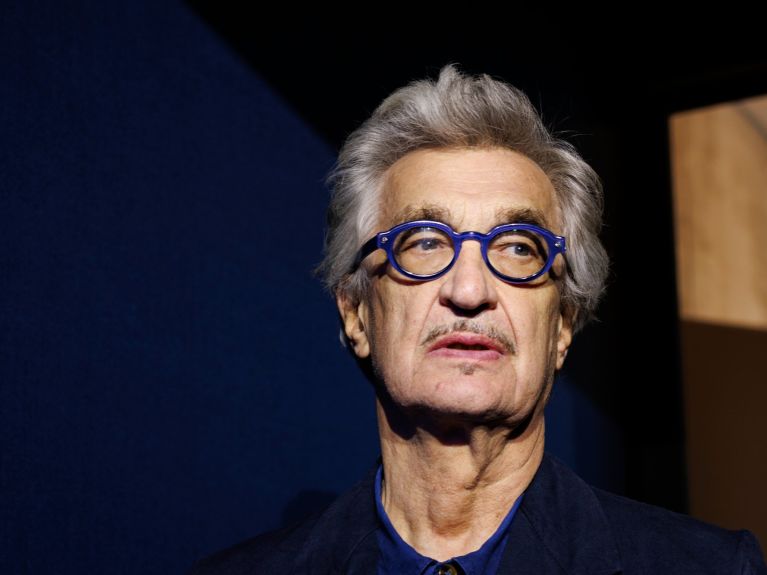
Director Wim Wenders chairs the International Jury
This year, the International Jury is chaired by German director Wim Wenders, one of the country’s most renowned filmmakers. It will decide on the Golden Bear and other awards by 21 February. The festival concludes on 22 February with the traditional Audience Day, when thousands of Berliners can see festival films at regular cinema prices.


