188 days between Cyprus and Lebanon
Monitoring the sea area, training Lebanese soldiers: aboard a German frigate that is involved in the UNIFIL peacekeeping mission.
 André Uzulis
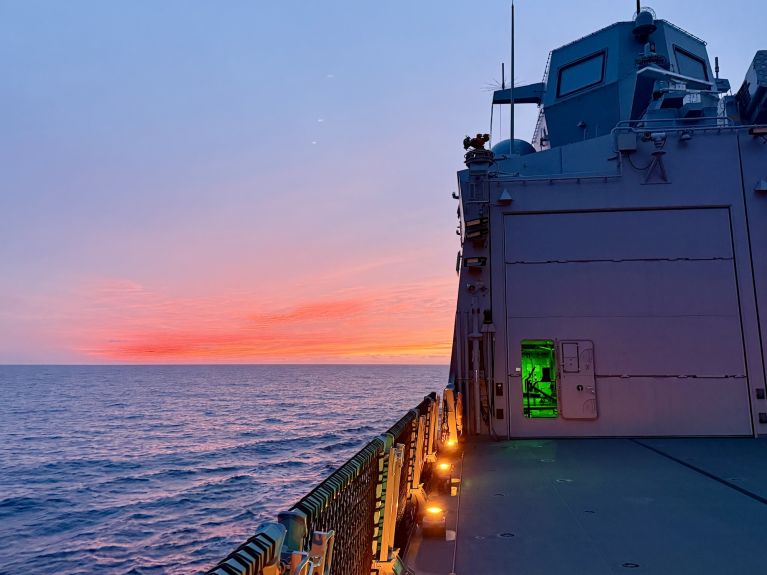
 It’s a sunny morning in February in the Cypriot Port of Limassol. The frigate Sachsen-Anhalt is pushing off, and its stern is moving away from the pier. 7,200 tonnes of material have been set in motion. Eventually, the bow also becomes detached from the quay. Two harbour towboats are circling the vessel, read to intervene at any time, but they don’t have to. The German navy’s most modern ship is now facing the open sea. It is heading east-southeast. The destination of the trip lies beyond the horizon: Lebanon.
Reporting suspect vessels to Lebanese navy
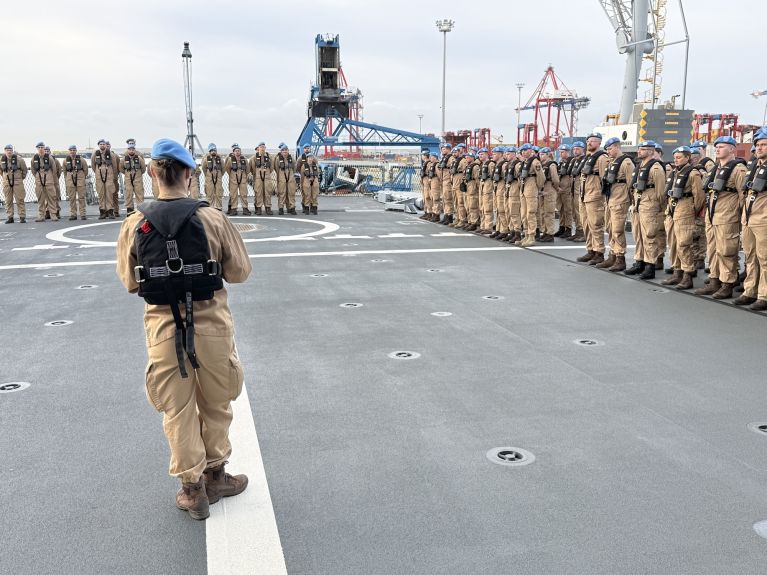
The Sachsen-Anhalt frigate is part of the UN peacekeeping mission UNIFIL (United Nations Interim Force in Lebanon). The mission has been going on for 48 years, making it one of the United Nations’ longest-running peacekeeping missions, in addition to being the only one with a maritime component. The navy operation off the Lebanese coast started in 2006, and Germany has been involved in it since. The task here is to monitor the sea area and to inform the Lebanese navy about any suspect vessels that could be smuggling weapons. In addition to this, Lebanese navy soldiers are being trained. The commander of the multinational navy component has been a member of the Federal Armed Forces since 2021. The German flotilla admiral is based at the UNIFIL headquarters in Nakura in Southern Lebanon.
More than 300 Germans – soldiers, police officers and civilian experts – are currently serving in UN missions. The German Armed Forces is sending personnel to the UN missions MINURSO in Western Sahara, UNMISS in South Sudan and UNIFIL (Lebanon). Since 1991, the German Armed Forces has participated in 14 UN-led peacekeeping missions.
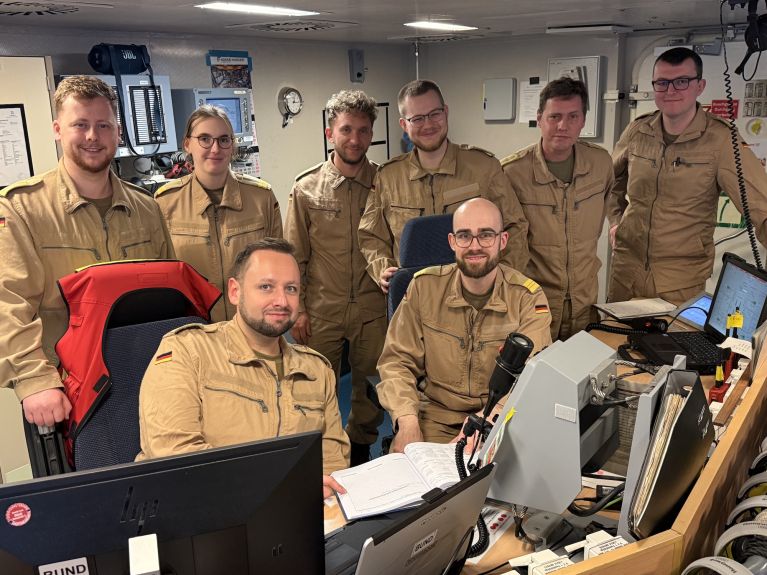
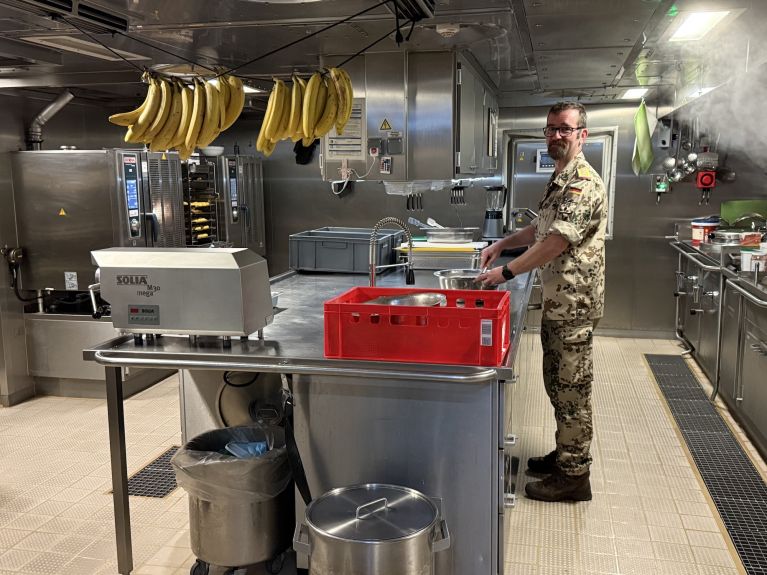
Around 150 Bundeswehr soldiers make up the crew of the Sachsen-Anhalt frigate. One of them is the petty officer first class Robert, who is the ship’s second purser. The 44-year-old is a trained chef. He wanted to “leave the catering industry behind” and joined the Bundeswehr, where he discovered his love of the seafaring life. Robert has by now travelled 100,000 nautical miles. The current mission is, however, his longest to date. Ida, who is a paramedic in the Medical Service and the ship’s doctor’s assistant, is looking forward to seeing her family in Magdeburg again, after a long mission like this, too.
A captain with a heart and a brain
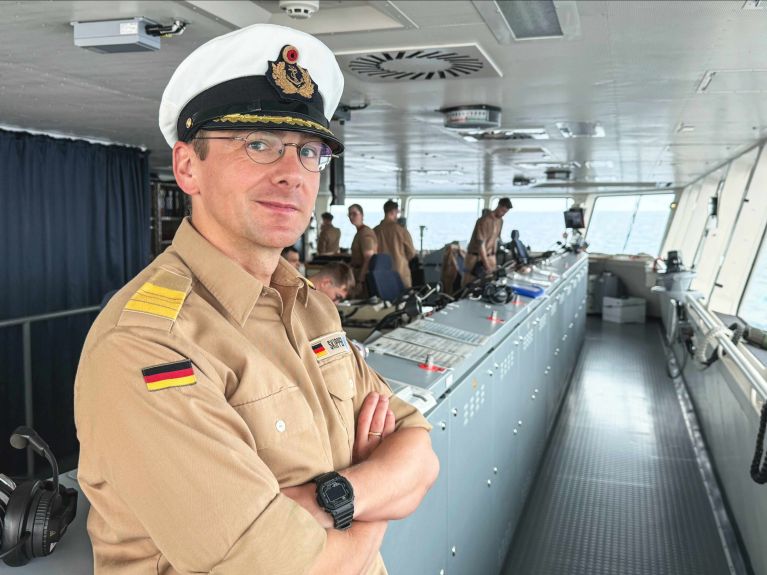
The frigate’s captain Daniel Läzer is the commander of the Sachsen-Anhalt. He’s known as the “old guy” aboard, despite being only 44. He plays a key role when it comes to ensuring that things go well on the ship both professionally and personally. The soldiers describe Daniel Läzer as a leader “with a heart and a brain”. His team trusts him and the appreciation is mutual: “This is best crew we have,” Läzer says.
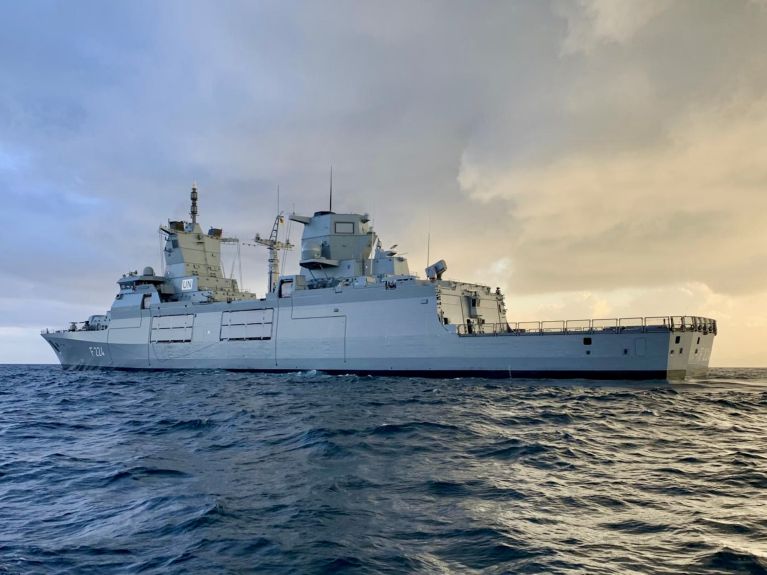
Upon their return to Wilhelmshaven in March, the crew will have a bit of a break, before going to Norway for an exercise a few weeks later. After its UNIFIL activities, the Sachsen-Anhalt frigate and its crew are going to focus on national and alliance defence for the time being.
Following a 188-day deployment, the Sachsen-Anhalt is returning to its home port in Wilhelmshaven on 1 March 2026. Together with the Bengalese Sangram corvette, the vessel spent more than half a year monitoring the sea area off the Lebanese coast. Planning provides for the Lebanese navy to fully take care of this job on its own soon. The UN Security Council decided that the UNIFIL mandate should expire on 31 December 2026.


