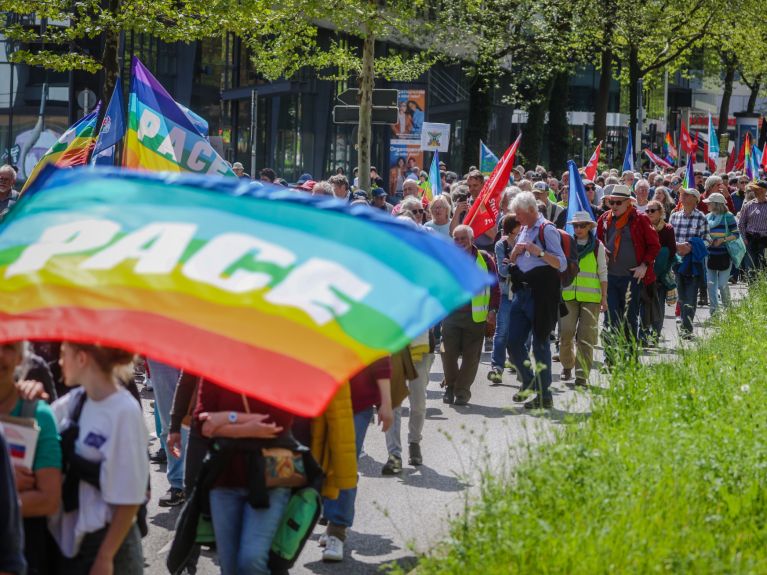
Opposition encouraged: how to fight for what you believe in
Petition, lawsuit, referendum, strike or protest: how you can fight for your cause by democratic means in Germany - and bring about change.
 Clara Krug
 When people in Germany are bothered or concerned about something – be it in the political or social spheres or in their working lives – they have numerous democratic opportunities to change something. Some of these are regulated by law, while others are based on civic engagement. Here are just a few of them:
Submit a petition
Everyone in Germany has the right to address requests or complaints to parliaments. At federal level, citizens can submit petitions to the German Bundestag – even online. If supported by enough people, the petition may lead to a public debate in the Petitions Committee.
Go to court
A person who believes their rights have been violated can also take legal action - to complain for example about official decisions or to resolve disputes over money. The German legal system encompasses everything from administrative courts to the Federal Constitutional Court. The latter is where citizens can lodge a constitutional complaint if they believe their basic rights have been violated.
Referendums
In Germany, direct democracy takes place mainly at state and municipal level. Citizens can use referendums to bring about political decisions – for example on infrastructural projects or environmental issues.
Industrial disputes: strikes and collective bargaining
Employees in Germany are free to form unions in an attempt to achieve more collectively than they could individually - such as higher pay, better working hours or more holiday. If a conflict arises over a collective wage agreement, unions can also use strikes to assert their demands - only civil servants are not permitted to go on strike.
Civil disobedience and protests
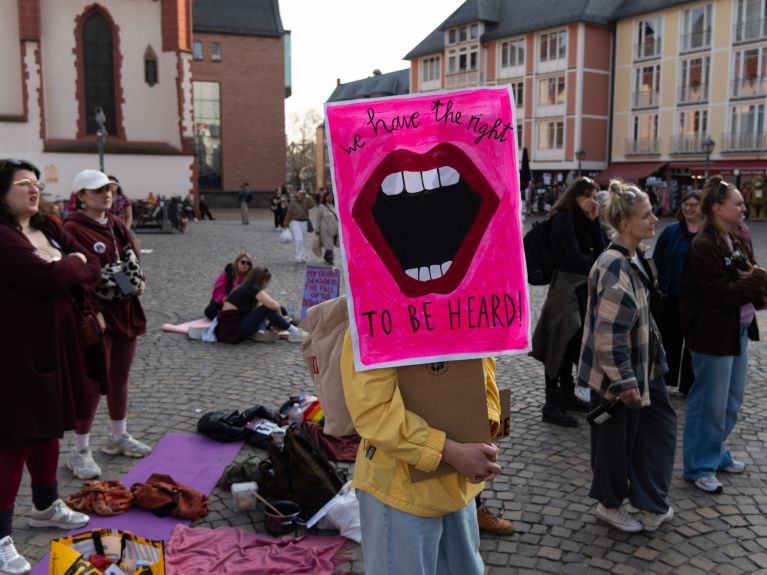
Demonstrations and protests are part of the democratic culture in Germany. Freedom of assembly is enshrined in the Basic Law. The right to engage in political protest is part and parcel of freedom of expression: in most cases, a person who expresses their views in words, writing or pictures - for example in the form of posters, slogans or speeches - can invoke Article 5 of the Basic Law. Civil disobedience - that is to say the deliberate breaking of rules for political reasons - is part of public debates. However, anyone who breaks the law in the process can expect legal consequences.


