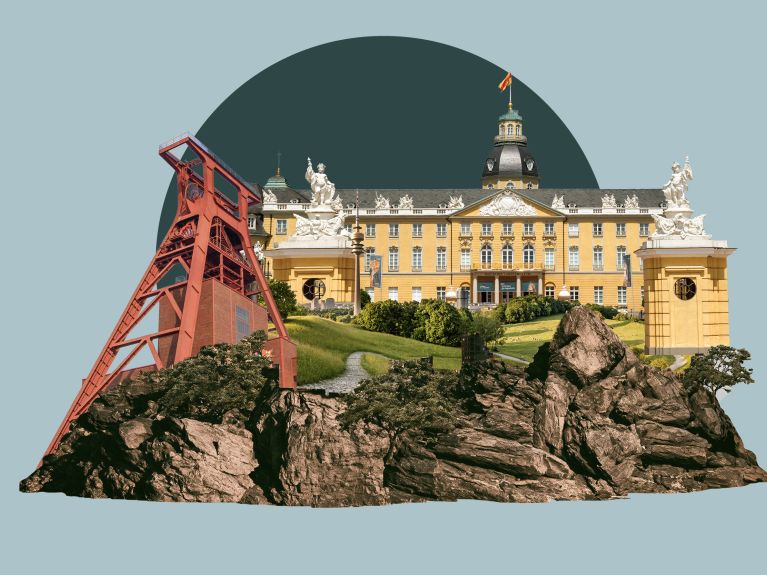
One country, many styles – but what does “German” architecture look like?
 Interview: Ina Brzoska
Herr Rettich, if someone had never been to Germany before, which three places would you show them that would define this country?
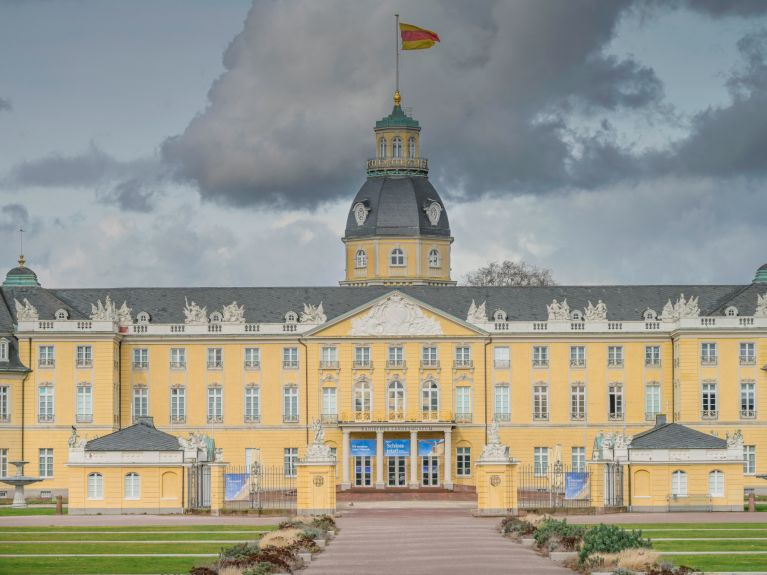
I would pick places where it’s particularly easy to discern the history of Germany, such as Schlossplatz in Karlsruhe. During the Baroque period, the city was laid out in a fan-shaped pattern centred around the palace. But just over the road is the building which became home to the Federal Constitutional Court in the 1960s. Instead of erecting a monumental “palace of justice”, the architect Paul Baumgarten conceived a complex of low-rise, interconnected buildings with broad glass facades. This open, unpretentious form of architecture embodies Germany’s democratic fresh start after National Socialism.
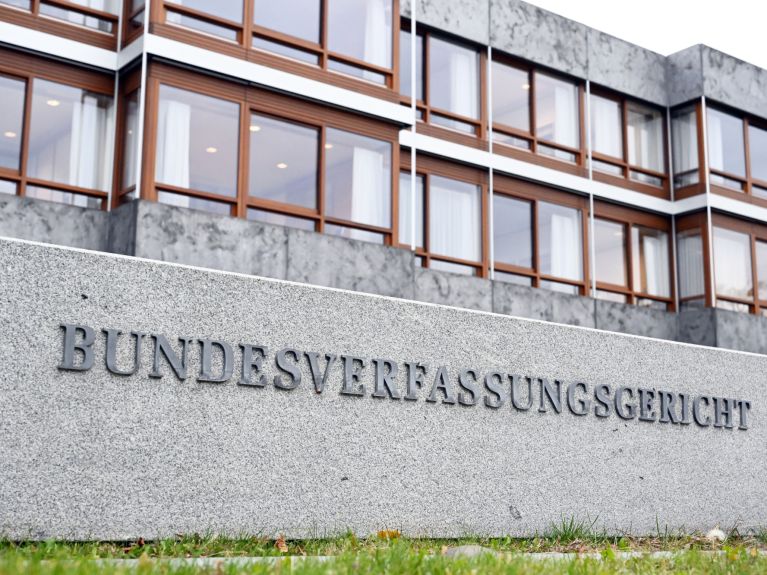
Where does architecture still provide a clue to Germany’s eventful history?
Augustusplatz in Leipzig, for example. Here you will find the monumental post-war opera house, the modern Gewandhaus concert hall with its glass facade, and a high-rise tower whose form evokes that of an open book, all directly adjacent to one another. But the square doesn’t just tell the history of architecture; it was also the scene of the Monday Demonstrations of 1989.
Which place would be your third choice?
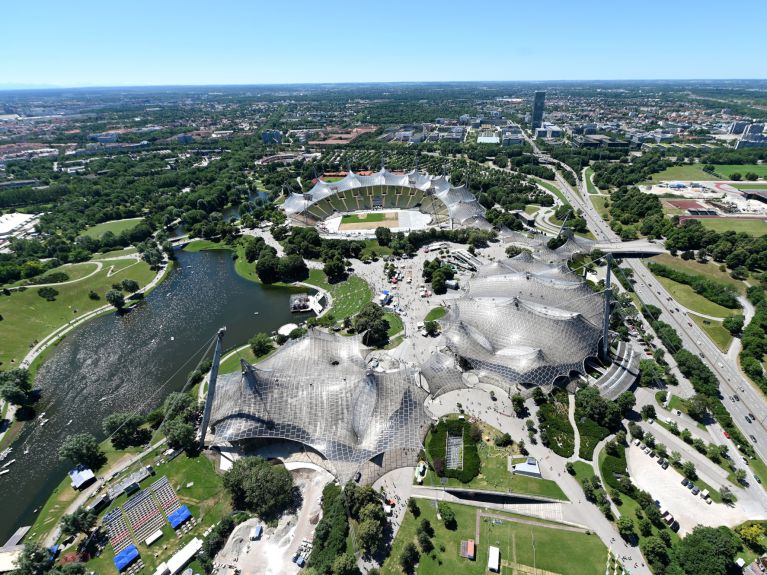
The Olympic Park in Munich. With its curved, transparent tent-like roofs which blend into the undulating landscape, it marks deliberate contrast with the monumental architecture of National Socialism. At the 1972 Olympics Germany wanted to present itself as an open, democratic society.
What does this variety tell us about German architecture? Is there really such a thing as a characteristically German architectural style?
No, there isn’t one single German style of architecture. Rather, it is characterised by the juxtaposition of different eras. In many cities, that’s what gives a clue to this country’s eventful history.
Many German cities suffered extensive destruction by bombing during the Second World War. When the cities were rebuilt, why did some take the historic appearance of their city as a model, while others created wholly new urban structures?
One factor was the extent to which each city had been affected. Munich, for example, set about preserving its appearance as a historic city. Damaged stonework on the Alte Pinakothek gallery was replaced with new stone, and the scars are still visible today. In cities such as Hanover and Kassel, however, over three-quarters of the buildings were destroyed. Here, reconstruction was taken as an opportunity to reshape the cities from the ground up. In those cities, broad streets emerged, along with modern office buildings and pedestrianised areas. At the time, it was considered a huge leap forward.
In the Ruhr region, former collieries and steelworks have become places for leisure and culture. What do you make of this transformation?
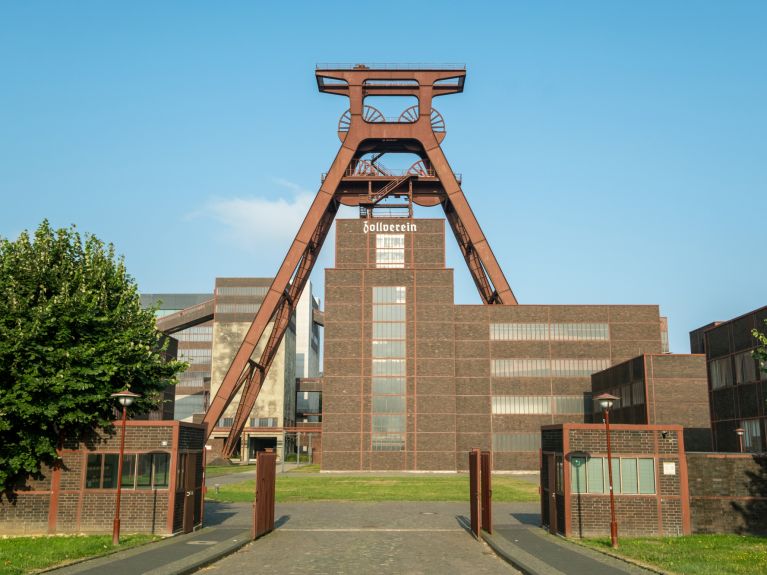
You can’t praise it too highly. For many years, former industrial sites were simply torn down. However, a fundamental shift in people’s mindset began in the late Eighties with the Emscher Park International Architectural Exhibition, a major urban development project. Instead of demolishing factories, people acknowledged their value in bearing witness to our industrial history, and gave them new functions. The Duisburg-Nord Landscape Park is an impressive example of this, where former blast furnaces have become part the landscape of a public park. This approach to engaging with industrial heritage has become a model for the rest of the world.
Which recent architectural projects do you feel have been a particular success?
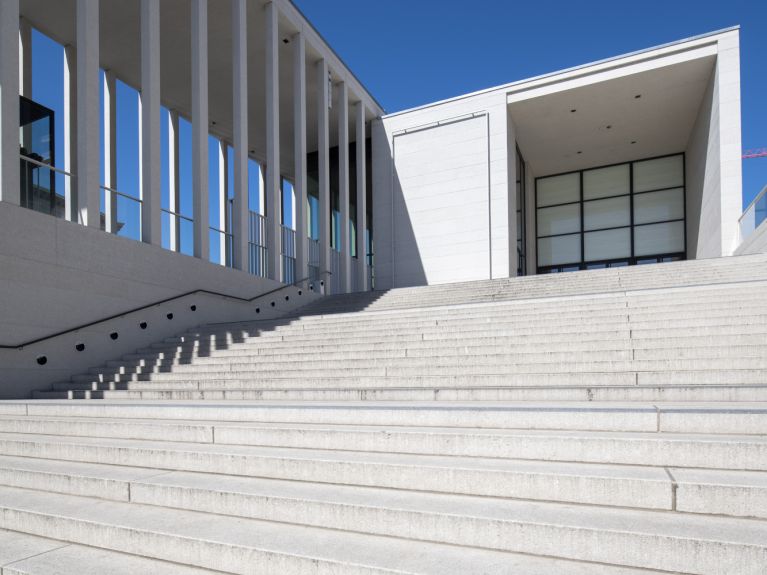
One successful example is the Federal Office of the Environment in Dessau. The curved structure with its brightly-coloured glass and timber facade illustrates how sophisticated architecture can be combined with environmentally-friendly construction. I am particularly impressed by the New Museum in building, which was restored by the British architect David Chipperfield. There, historic walls which bear visible scars of war sit side-by-side with modern elements such as the unadorned monumental concrete staircase. Rather than covering up the past, the choice was made to leave it open to view. It’s a sign that modern architecture doesn’t have to extinguish the history of a building – instead, it can continue to tell that story.
Stefan Rettich studied architecture in Karlsruhe and set up KARO, a firm of architects based in Leipzig. He is now a professor of urban planning at the University of Kassel, where his research focuses on sustainable urban development and re-using existing buildings. He has been a member of the advisory board of Stiftung Bauhaus Dessau since 2025.


