“Fairy tales help us understand one another”
Literature expert Tilman Spreckelsen explains why fairy tales resonate worldwide and why their characters speak to every culture.
 Interview: Johannes Göbel
 Mr Spreckelsen, why do people still need fairy tales today?
There’s a vast body of literature examining the extent to which fairy tales may have a therapeutic effect on us. One well-known example is “The Uses of Enchantment”, a study written by the psychoanalyst Bruno Bettelheim in 1976.
Bettelheim argued that fairy tales can help children understand and process inner conflicts, fears and developmental crises.
But I would also emphasise the literary quality of fairy tales. They are a genre in their own right: as an art form, they are timeless.
What is it that makes the Grimms’ fairy tales so relevant that they are constantly re-filmed and retold?
The Grimm fairy tales achieved such early prominence that they overshadowed many other collections. At the same time, Jacob and Wilhelm Grimm triggered an impulse that was taken up around the world: people everywhere began collecting fairy tales, whether among the Māori, in Japan or in Chile. For many people, the tales of the Brothers Grimm have become omnipresent. It is enough to say “The Frog Prince”, and the story instantly springs to mind, even if you’ve never read it. And Jacob and Wilhelm Grimm have themselves become literary figures, as models for the “Reckless” series by Cornelia Funke, for example, or in the Hollywood film “The Brothers Grimm” starring Heath Ledger and Matt Damon.
To what extent do fairy-tale characters transcend cultural boundaries?
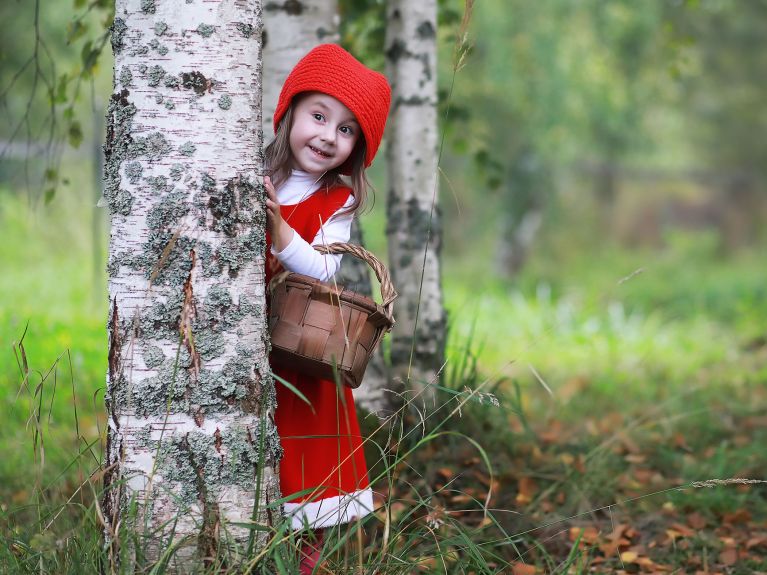
You may find a “Little Red Riding Hood” variant in Japan, or a South American version of “The Fisherman and His Wife”. But we need to be careful here: the origins of many tales remain unclear, and in many cases a tale did not achieve international impact until after it was written down. In any case, fairy tales have a universal quality that allows us to understand one another across cultures.


