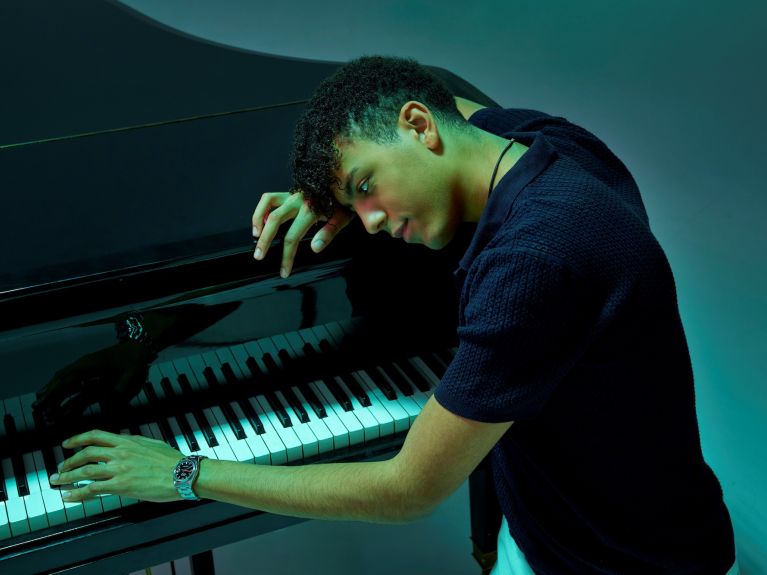
The Gen Z Beethoven
Louis Philippson is a rising piano star on TikTok: with perfect pitch, millions of fans and sold-out tours. He explains in our interview how he is changing classical music.
 Interview: Christina Iglhaut
 During a chat show, the presenter audibly places her cup on the table. Louis Philippson smiles briefly and says: “That was a C.” The rising star of the classical music scene, Louis has perfect pitch - and millions of followers. Louis started school early at the age of four (children in Germany don’t normally go to school until they are six), and by the age of eight already enrolled as a student at the Robert Schumann conservatory in Düsseldorf. These days, the constant flashing of cameras and hours spent signing autographs are all in a day’s work for him. These are scenes we normally associate withpop stars, but now the classical music scene has its own rising star.
Louis, which piece of music would you play to someone who says that classical music isn’t their thing?
I’d go pretty radical and play “La Valse” by Maurice Ravel. Actually it’s pretty much the last piece you should play as an introduction to classical music. It’s just crazy and at times confusing, though also emotional, dynamic, full of sensitive passages and virtuoso moments - it’s my favourite piece. And that’s exactly what it’s about for me: I want to show why I love classical music rather than just use it as bait.
That was also the first piece you posted on social media. You’ve now got over a million followers. What sort of people follow you?
My followers are much younger than conventional concertgoers. The average age on social media is perhaps 22 – on TikTok it’s often teenagers who are experiencing classical music for the first time.
Does social media make it easier for people to access classical music?
Most importantly, it shows that classical music is played by ordinary people. Not by some unapproachable elite. The music itself is not at all inaccessible - but the way it is communicated and packaged often is. Pop musicians tell stories and are approachable. This is no longer the case in classical music, even though Mozart and Beethoven were also cool and to some extent wild characters. This more human side of classical music should definitely be given more space again these days.
Do established classical music experts find you annoying?
Obviously I expected that some might roll their eyes a bit at first. That would definitely have happened ten years ago. But many people realise that new approaches are needed. Things that used to be considered ludicrous - like going on stage barefoot - are now celebrated. All the same, traditional concerts also have their place. It’s not about choosing between one or the other.
And do the people you reach on social media then also come to your concerts?
That was the big question: whether people who watch one minute of classical music on their feed would also “put up with” aconcert lasting an hour and a half. But my first tour sold out quickly, as did my second. Social media serves as a gateway, but the concert itself remains the archetypal form. There’s no substitute for a concert hall experience.
Is your audience international?
Yes, that’s what is magical about instrumental music - it transcends borders. It is a language that anyone can understand, if you give it a chance.
What questions do people post most often in your comments section?
“Could you please play X or Y?” and, most common of all, “How much do I need to practise to get as good as you?”
And what do you reply?
Always practise. Practise till you drop! (laughs)


