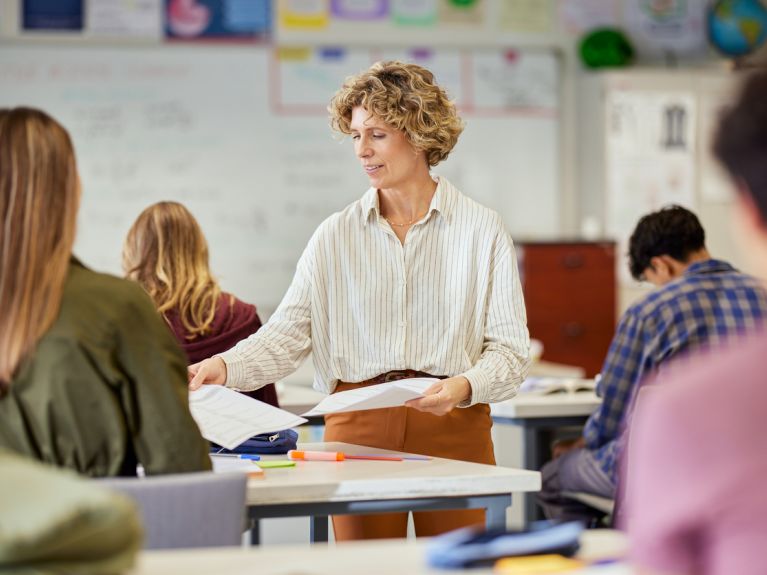
“Empathy benefits democracy”
What makes a great school nowadays? Prizewinning teacher Simone Windhüs talks about AI, new expectations, and education for democracy in daily life.
 Interview: Ralf Isermann
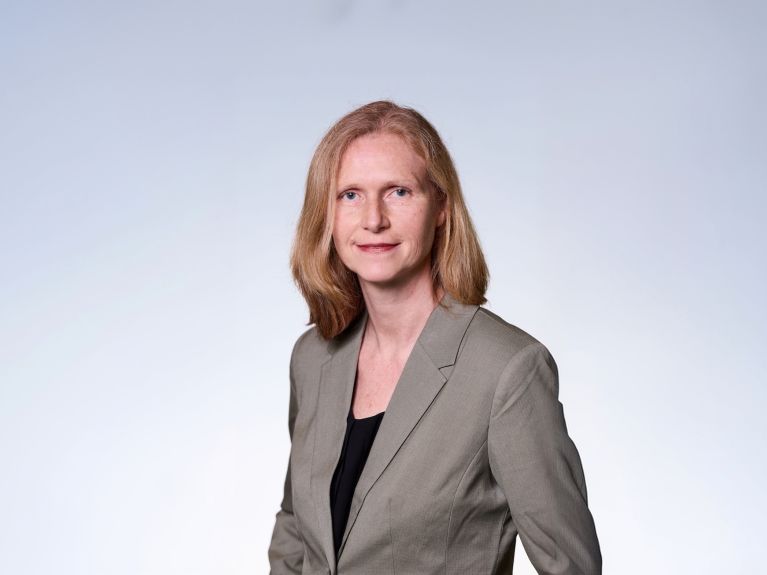
 In 2025, Simone Windhüs won the “Outstanding Teacher” award from the German Teaching Prize. Her students praised her for her subject knowledge, dedication and motivation. Windhüs teaches Maths and Biology at Landfermann-Gymnasium in Duisburg in the Ruhr Region. In this interview, she talks about the recognition she has received and the challenges she and other teachers face.
Ms Windhüs, has this award changed your life as a teacher?
Since receiving the award, I’ve been going to school feeling even more motivated. This award is feedback that you don’t get every day. One thing I really appreciate is how so many of my former students have got in touch. I taught one of them 20 years ago. Now she’s a teacher herself and is training new teachers, too. She said thank you for the lovely time she had in my class back then.
What does being a teacher mean nowadays?
The demands for individual support have increased significantly. That’s the expectation of society, parents and children, too. It’s very different to 20 or 30 years ago. You have to be much more flexible in how you design your lessons and offer more opportunities. It’s increasingly the case that teachers are expected to bring up children.
What role does AI have to play here?
It’s a real challenge. Essentially, homework has become unnecessary. As a school, we have to rethink the way we construct our teaching. But AI can help, too. I hope it will help us meet children’s individual needs and take over tasks that were previously the job of teachers. For example, AI can help provide individualised support with subject content. You can offer individual learning activities that are tailored to each child, for example, so everyone gets the support and challenge appropriate to where they are now.
How important are schools in efforts to promote democracy?
Given that children spend so much of their lives at school, I think it is vitally important that democratic values are taught there – and I think that does happen. Countless tiny situations from day-to-day life take place in schools. It starts when children listen to a child who is talking about something, and when they’re finished, discussing what they said in an objective way that values their contribution. That’s a hugely important contribution to promoting democracy. Showing empathy for others, creating an appropriate culture for conversations, fostering a healthy culture for disputes: we teach all those things, and they serve democracy.
The winner of this year’s €100,000 award for best school is Bertha-von-Suttner-Schule in Mörfelden-Walldorf in Hesse, which ranked top in the German School Prize 2026. The award praised aspects such as the school’s excellent use of AI as a tool, while still teaching students to reflect critically. Five other schools received €30,000 each. The Robert Bosch Foundation and the Heidehof Foundation have been awarding the prize for 20 years to acknowledge outstanding schools. The 2026 prize was presented by Federal Chancellor Friedrich Merz.


