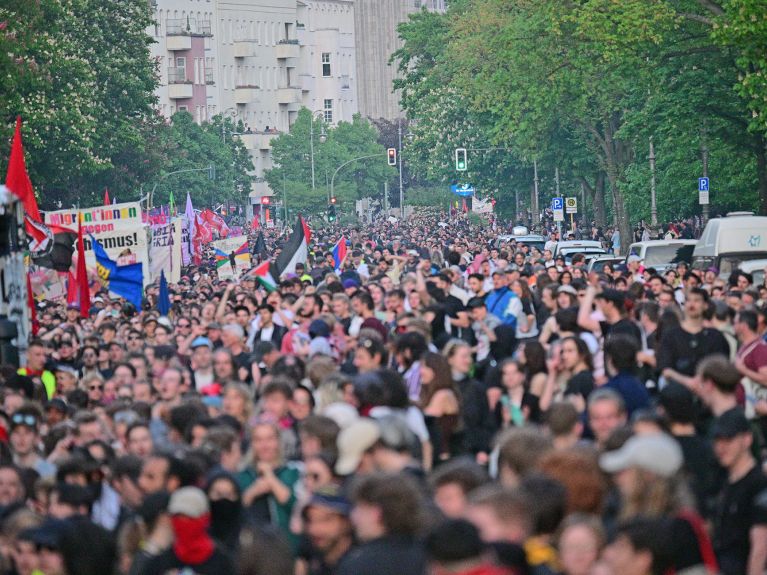
Berlin’s May 1 rituals: a single day, five different realities
In Germany, the first of May is a public holiday that is meant to highlight workers’ rights. Activists stage peacefull rallies. In Berlin things are a bit different.
For some, May Day is a day of celebration, an opportunity to demonstrate for better working conditions and social justice. For others, it is one of the most exhausting working days of the year. Anyone wandering around Berlin on this day will see demonstrations, parties and - in isolated cases - violence. Hardly any other date gives such a powerful impression of how people in Germany exercise their right of assembly. We hear from five individuals who make it clear just how different people’s experiences of this day can be.

Frank Werneke, chairman of the trade union verdi
“The first of May is more important than ever. We union members take to the streets together to defend the welfare state as the basis for cohesion, prosperity and growth. We categorically reject attacks such as the abolition of the eight-hour day or reductions to pensions and healthcare. On an international level, we demonstrate solidarity with all those who fight for better working conditions, peace and democratic rights.”
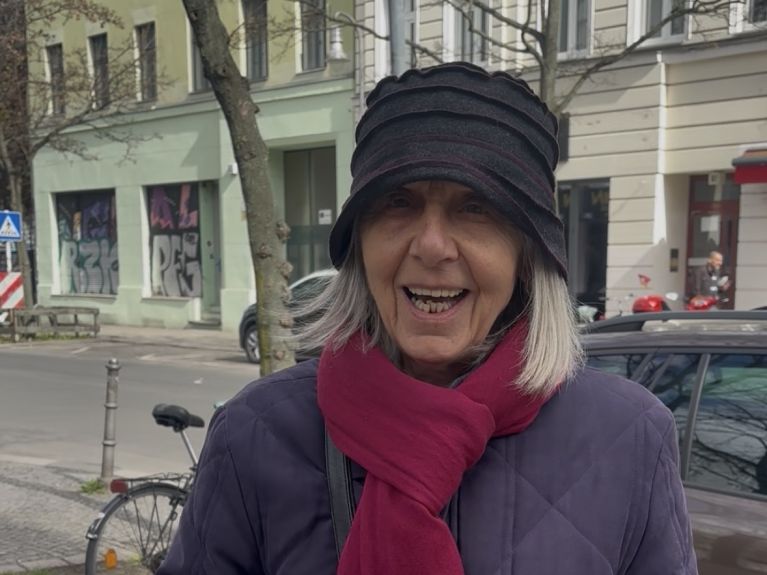
Helene Scharf, local resident
“I’ve lived near Mariannenplatz in Kreuzberg, where the May Day demonstration begins, for 45 years. I used to go out and demonstrate with them, and it was often a game of cat-and-mouse with the police. Skirmishes continue to break out to this day - they are more or less inevitable. May Day is also about making an important stand against fascism. On this day, Kreuzberg is the domain of the young. Older people can take part in the calmer demonstration led by the German Trade Union Confederation at the Red Town Hall.”

Alexander Poitz, deputy chairman of the German Police Union
“The first of May is the most important day of the year for us. It shows what unions have already achieved and still want to achieve. Many police officers have mixed experiences of it: they are on duty and there to protect the events. In big cities in particular, we see verbal abuse, damage to property and violence every year. Police officers are frequently targeted and attacked. It is thanks above all to intensive preparation and the deployment of large numbers of police officers that May Day demonstrations now appear more peaceful. But there can be no talk of a peaceful day for as long as police officers are still being injured.”

Serdar, kiosk owner
“As a shop owner, May Day is all about being prepared, taking precautions and getting through the day. I order more supplies and remove anything that could be stolen or get damaged. On the day itself, my brother helps me out in the shop. The mood at the demo is tense during the day, and in the evening the whole area becomes a party. This is precisely the contrast that typically characterises this day.”

Robin Ilibasic, student
“I’ve tended to avoid the May Day demo in Kreuzberg in recent years because I don’t like the huge crowds. Nonetheless, it’s still an important day in terms of political and social issues. This shouldn’t be something that only happens once a year, however, but should also be part of daily life. I’m in favour ofpeaceful demonstrations so long as the issues they address are the focus rather than just partying or rioting. I do wonder though how much such demos in fact achieve and whether politicians actually implement their demands.”


