Do Germans have a sense of humour? A journey from Tucholsky to TikTok
Why German humour hides surprising stories – and what a maggot has to do with it.
 Kim Berg
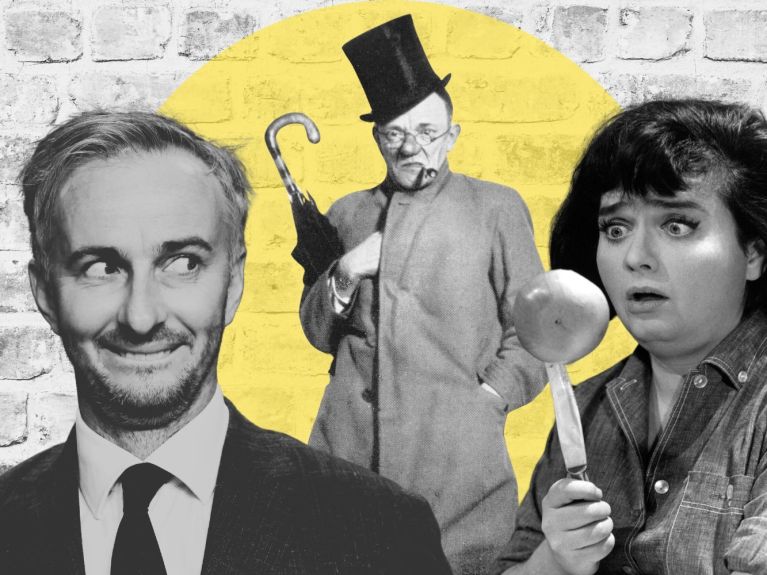
 It’s a stereotype that has proven difficult to dispel: Germans have no sense of humour. Yet a glance over the past 100 years reveals how multifaceted, profound and capable of change German humour actually is.
The golden 1920s: satire and irony
Germany was in utter chaos after the First World War: a young democracy, the country was struggling with inflation and political uncertainty. Humour blossomed during this turbulent period. Satirists such as Kurt Tucholsky used subtle wordplay and wit to protest against militarism and narrow-mindedness – their aim was to spotlight problems and shortcomings while giving society food for thought. When asked “What is satire allowed to do?”, Tucholsky’s answer in 1919 was: “Anything.”
Dieses YouTube-Video kann in einem neuen Tab abgespielt werden
YouTube öffnenThird party content
We use YouTube to embed content that may collect data about your activity. Please review the details and accept the service to see this content.
Open consent formHumour was also about more than just on-stage entertainment in 1920s Berlin. In her refreshingly direct and brash style, cabaret artiste Claire Waldoff brought the lives and attitudes of ordinary people to the stage - with a good dose of Berlin’s typically gruff humour. Her songs, such as “Raus mit den Männern ausm Reichstag“ (Out with the men from the Reichstag) weren’t just witty - they were political too: with biting sarcasm, she called for more women in parliament and made fun of the “fine gentlemen” there.
Humour during the Nazi era: anchored by daily life
The rise of National Socialism and the Second World War almost completely extinguished any humorous debate. Satire and cabaret were banned for the most part, with humour occasionally being used as a propaganda tool and to convey images of the enemy. At the same time, actors such as Heinz Rühmann, Hans Moser and Theo Lingen became hugely popular for their largely non-political comedy films.
Karl Valentin, a linguistic acrobat and a master of absurd humour, was also tolerated by the Nazi regime, though he wasn’t regarded as loyal to the party line. His puns and bizarre logic had his audience in fits of laughter.
Dieses YouTube-Video kann in einem neuen Tab abgespielt werden
YouTube öffnenThird party content
We use YouTube to embed content that may collect data about your activity. Please review the details and accept the service to see this content.
Open consent formThe 1950s and 1960s: wit and provocation
German humour revealed itself in all its variety again in the post-war period. Trude Herr, famous for her Cologne dialect and songs like “Ich will keine Schokolade, ich will lieber einen Mann” (I don’t want chocolate, I’d rather have a man), offered her self-deprecating take on conventional women’s roles. Heinz Erhardt was the master of innocuous yet sophisticated wordplay: his rhyming verse, such as “Die Made” (The maggot), remains very popular to this day.
Dieses YouTube-Video kann in einem neuen Tab abgespielt werden
YouTube öffnenThird party content
We use YouTube to embed content that may collect data about your activity. Please review the details and accept the service to see this content.
Open consent formIn the wild 1960s, the time of the student movement, Wolfgang Neuss shook things up on stage with his political wit, satire and breaking of taboos. The “man with the kettledrum” was provocative and polarising and became the mouthpiece for a new, critical generation.
Years of new openness: the subtle irony of everyday life
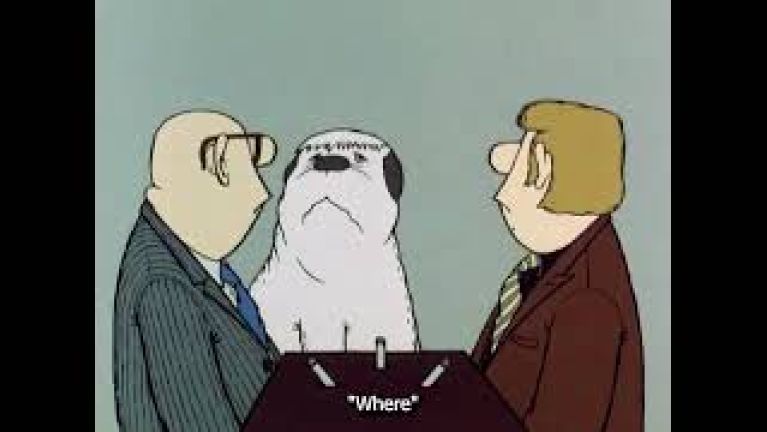
In a society that fluctuated between pressure to succeed, new beginnings and stuffy narrow-mindedness, Vicco von Bülow - aka Loriot - became the master of subtle irony: his sketches dissected the trivial misunderstandings and absurdities of everyday and family life in Germany.
Dieses YouTube-Video kann in einem neuen Tab abgespielt werden
YouTube öffnenThird party content
We use YouTube to embed content that may collect data about your activity. Please review the details and accept the service to see this content.
Open consent formBe it the famous “breakfast egg” or his talking dog - Loriot’s humour was gentle but struck home. He demonstrated that anyone able to laugh at themselves will take life less seriously.
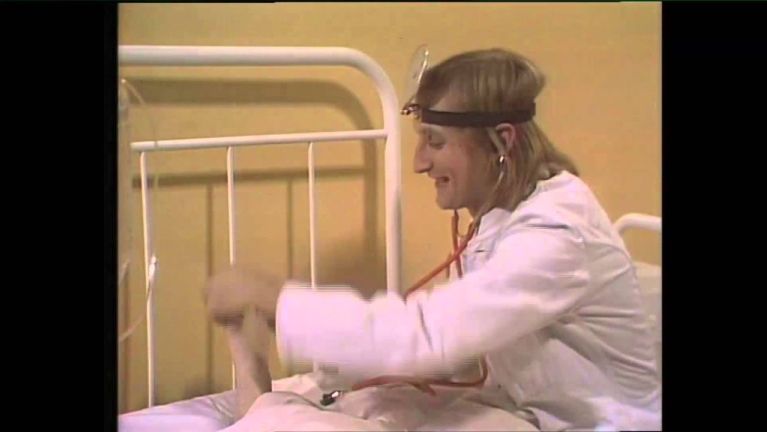
Another comic who was at least as successful, though more inclined towards slapstick, was Otto Waalkes, or Otto for short. With puns, nonsensical sketches, hilarious comic characters and musical parodies, he shaped Germany’s culture of humour for decades.
Dieses YouTube-Video kann in einem neuen Tab abgespielt werden
YouTube öffnenThird party content
We use YouTube to embed content that may collect data about your activity. Please review the details and accept the service to see this content.
Open consent formThe contemporary era: humour to reflect a diverse society
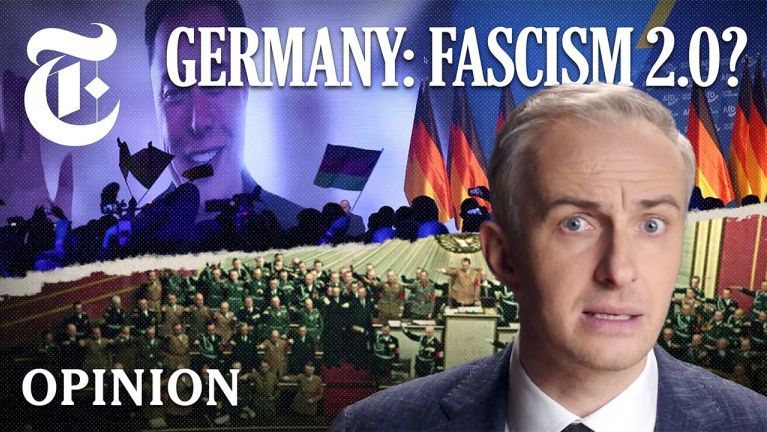
German reunification, globalisation and digitisation gave new impetus to humour, too. Humour can now be seen and heard all over the place: on television screens, in sold-out arenas, in podcasts, online, at the supermarket checkout – and sometimes even in the Bundestag. And the themes? They are as diverse as society itself. Migration, gender, the climate, social media, politics – nothing is off limits.
Dieses YouTube-Video kann in einem neuen Tab abgespielt werden
YouTube öffnenThird party content
We use YouTube to embed content that may collect data about your activity. Please review the details and accept the service to see this content.
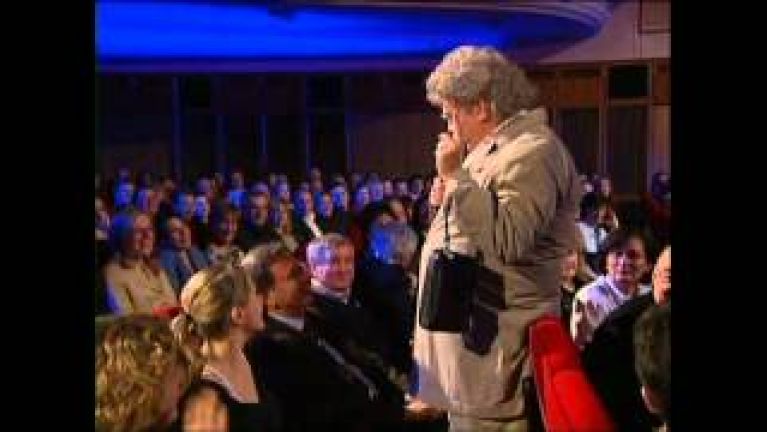
Open consent formHape Kerkeling is one of the most popular German comics and entertainers: he became famous decades ago for his at times anarchic TV sketches and to this day combines parody and improvisation with acting and presenting.
Dieses YouTube-Video kann in einem neuen Tab abgespielt werden
YouTube öffnenThird party content
We use YouTube to embed content that may collect data about your activity. Please review the details and accept the service to see this content.
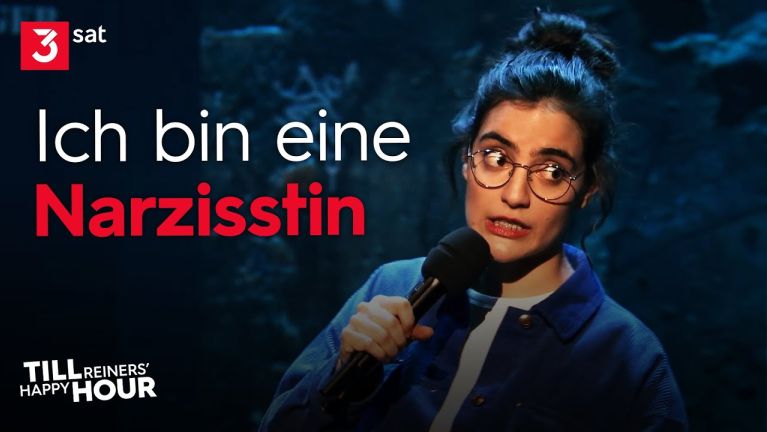
Open consent formComedians like Jan Böhmermann, Ana Lucía, Assane Badiane, Martina Hill and Felix Lobrecht bring a breath of fresh air and a new take on things. They play around with identities and prejudice - and sometimes also reach an international audience. Young artists, many of whom have a migrant background, take a light-hearted look at ethnicity, diversity and social debates.
Dieses YouTube-Video kann in einem neuen Tab abgespielt werden
YouTube öffnenThird party content
We use YouTube to embed content that may collect data about your activity. Please review the details and accept the service to see this content.
Open consent form

