“Aid is blind to nationality”
Julia Tayps is a member of the German minority in Ukraine, where she has set up a cultural centre. When war broke out, it transformed into a source of aid.
 Protokoll: Helen Sibum
 “My first memories of German are from our church – my grandmother and great-grandmother spoke German. I was born in Mukachevo in the west of Ukraine in 1991, but my ancestors came from Germany. They came here from Franconia around 250 years ago, just like many other families back then. Later, during the Soviet Union, German was banned, but older people like my grandmother and great-grandmother still spoke it in private. That’s why I like to call it “Kitchen German”.
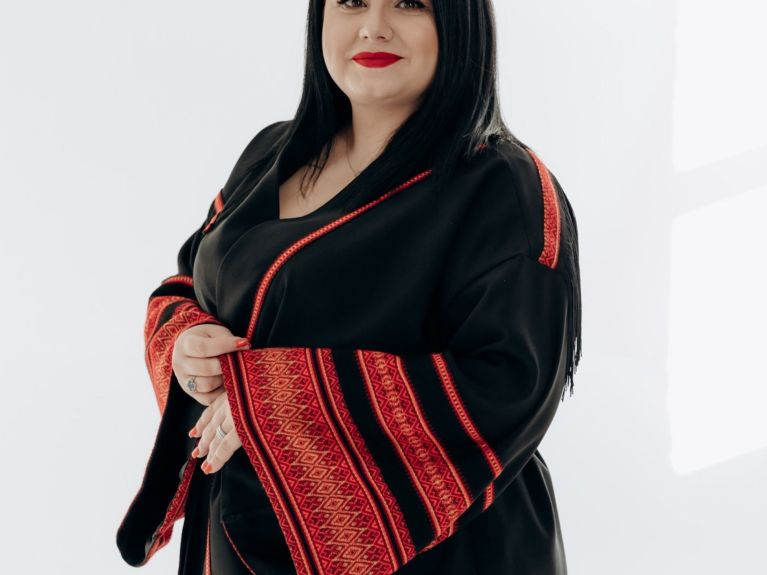
The German language has always been part of my life.
There are now around 5,000 members of the German minority in the Transcarpathia region. There are German-speaking churches – I used to go to services with my grandmother. Afterwards the old people met to drink tea and speak German. I often wondered where all the young people were. The German language was always a part of my life.
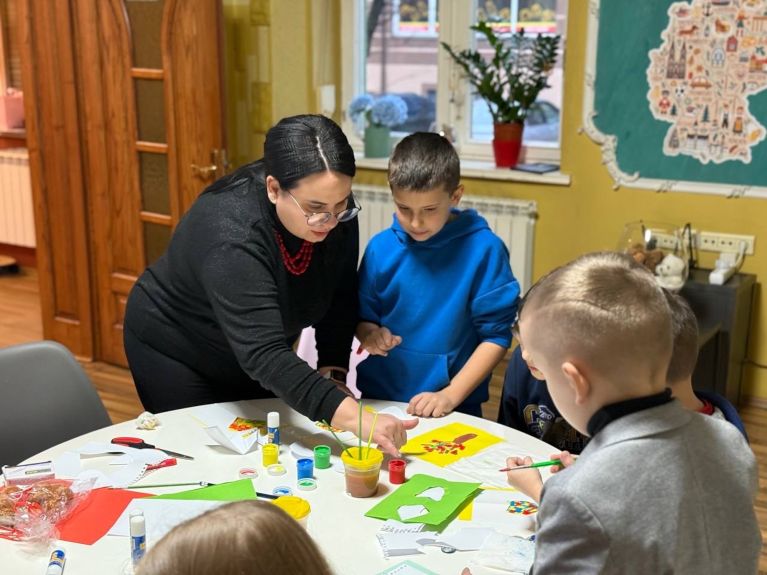
That’s why I founded the “German Young People in Transcarpathia” organisation in 2018. In 2023, Germany helped us open a cultural centre in Mukachevo: the German House. Free German courses are a major element of our work. We also run book clubs and clubs for young people, a theatre group, a choir and a supervised homework service. And we organise an annual Christmas trip to Germany.
Dieses YouTube-Video kann in einem neuen Tab abgespielt werden
YouTube öffnenThird party content
We use YouTube to embed content that may collect data about your activity. Please review the details and accept the service to see this content.
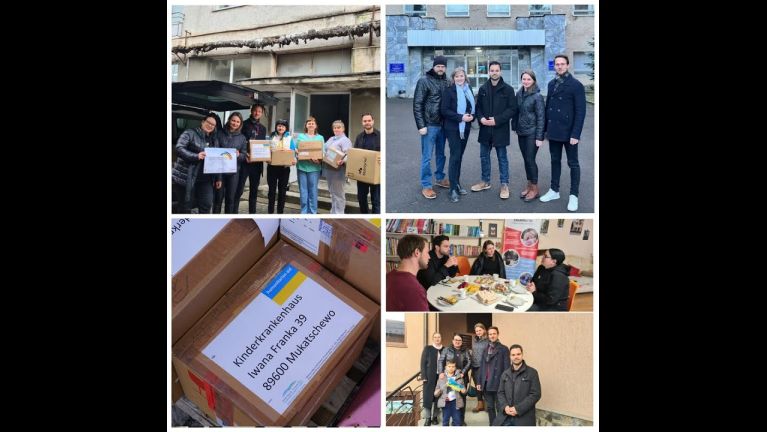
Open consent formWhen the war began, our cultural centre was transformed into a centre for humanitarian aid. We have a lot of international contacts with UNICEF and the UNDP, for example. In addition to that, we are in a relatively safe part of Ukraine – inasmuch as you can say that – close to the border with Hungary, Poland and Slovakia. We get regular deliveries of aid from Germany and other countries. We share some of the aid supplies with the many internally displaced people in this region, and we send some to people in need in the east of Ukraine. Of course that has nothing to do with whether or not they are members of the German minority. Aid is blind to nationality.”
German Young People in Transcarpathia is a partner organisation of the ifa – Institut für Auslandsbeziehungen.


