A Christmas Manual
What’s on the menu at Christmas? Which songs do people sing and what types of biscuits do they make? The writer Constanze Kleis shares some advice about the things to do and to avoid at Christmas.
Christmas is Germany’s number one family occasion. It is the Christian celebration of the birth of Jesus, however, many families nowadays celebrate the holiday without focussing on its religious background. Constanze Kleis wrote a book titled “Gebrauchsanweisung für Weihnachten” which translates into “A Christmas Manual”. We asked her what is needed for a proper Christmas celebration.
What are the must-haves at Christmas?
The official list includes a fir tree, candles or fairy lights and ornaments for the tree, a nativity set and a certain repertoire of Christmas carols. You also need good food including baked goods, such as Christmas stollen and vanilla crescents. A sufficient amount of generosity is key when it comes to presents, including for people like the postie, the caretaker or guests that may not be blood relatives.
What are the typical baked goods to eat at Christmas?
Biscuits are the uncontested number one on the list of Christmas treats. The German word Plätzchen originally meant “flat cakes”. It is believed that there are now 13,824 different Plätzchen varieties. Traditional flavours include vanilla, cinnamon, chocolate, lemon, orange, coffee, rum, hazelnut, almond, walnut, ginger, cardamom and honey, and many biscuits are crescents, rings, balls, discs, hearts and cubes in shape. Some Plätzchen are filled with ingredients such as chocolate, vanilla, jam and marzipan.
What does a traditional Christmas Eve look like?
It’s pretty much the scenario described by Nobel Prize in Literature winner Thomas Mann in his 1901 novel Buddenbrooks: everybody is singing Christmas carols. Later on, the presents are unwrapped that can be found under the splendid tree “decorated with silver tinsel”, and an abundance of food and drinks is served. In reality celebrations are often no longer structured quite so rigidly. Christmas can be a very enjoyable mixture of rituals chosen to make everyone feel at home and at ease.
What are some typical Christmas dishes?
Surveys suggest that potato salad with sausages is still the most popular choice for Christmas Eve. Next up are fondue and raclette. It was also found in a survey that by the time Christmas Eve arrives, women in particular will have spent 288 hours on average preparing for the occasion. The traditional choice for Christmas Day is a roast goose with dumplings and red cabbage.
What are the songs people in Germany like to sing at Christmas?
The archive managed by the Office for Christmas Carols in Graz in Austria includes around 12,000 songs. Christmas carols are like the master key that unlocks a festive atmosphere. 90 percent of Germans would not want to do without them. Silent Night is without a doubt the most famous Christmas carol in the world. It was first sung in Austria in 1818 and has since been translated into more than 300 languages and dialects.
Is there such a thing as a “modern” Christmas?
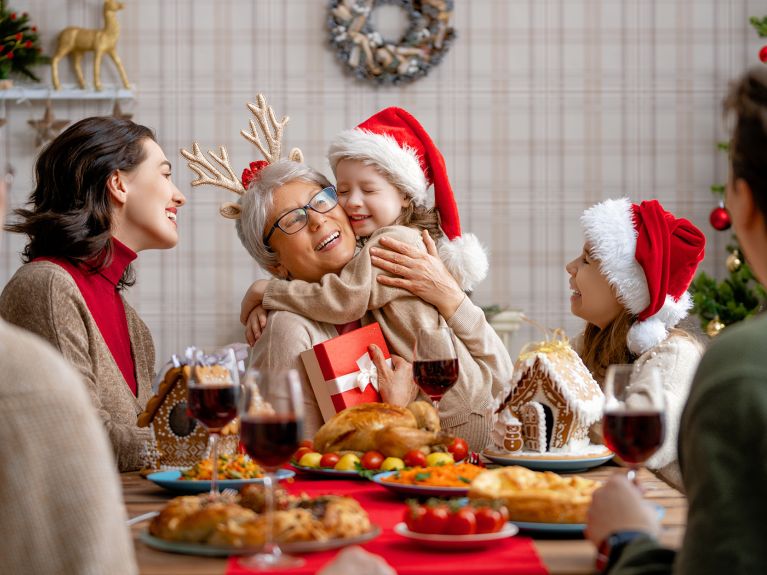
I would say that a modern Christmas is characterised by a more relaxed attitude to traditions. A Christmas tree? Maybe that’s not the most eco-friendly choice. Roast goose? Vegetarians might prefer a less brutal dish. However, the underlying idea of the holiday remains relevant, and that is for the family to gather once a year to share a meal. To spend some time together. To spread some joy by creating an atmosphere of comfort and togetherness, as well as through presents that show a person that you have thought about them and their wishes.
is a successful author and columnist who lives and works in Frankfurt am Main. She wrote a book titled “Gebrauchsanweisung für Weihnachten” which translates into “A Christmas Manual”.